
Season 5, Episode 21: “Earth From Above” – The Psychology of Seeing Our Planet From Higher Perspectives
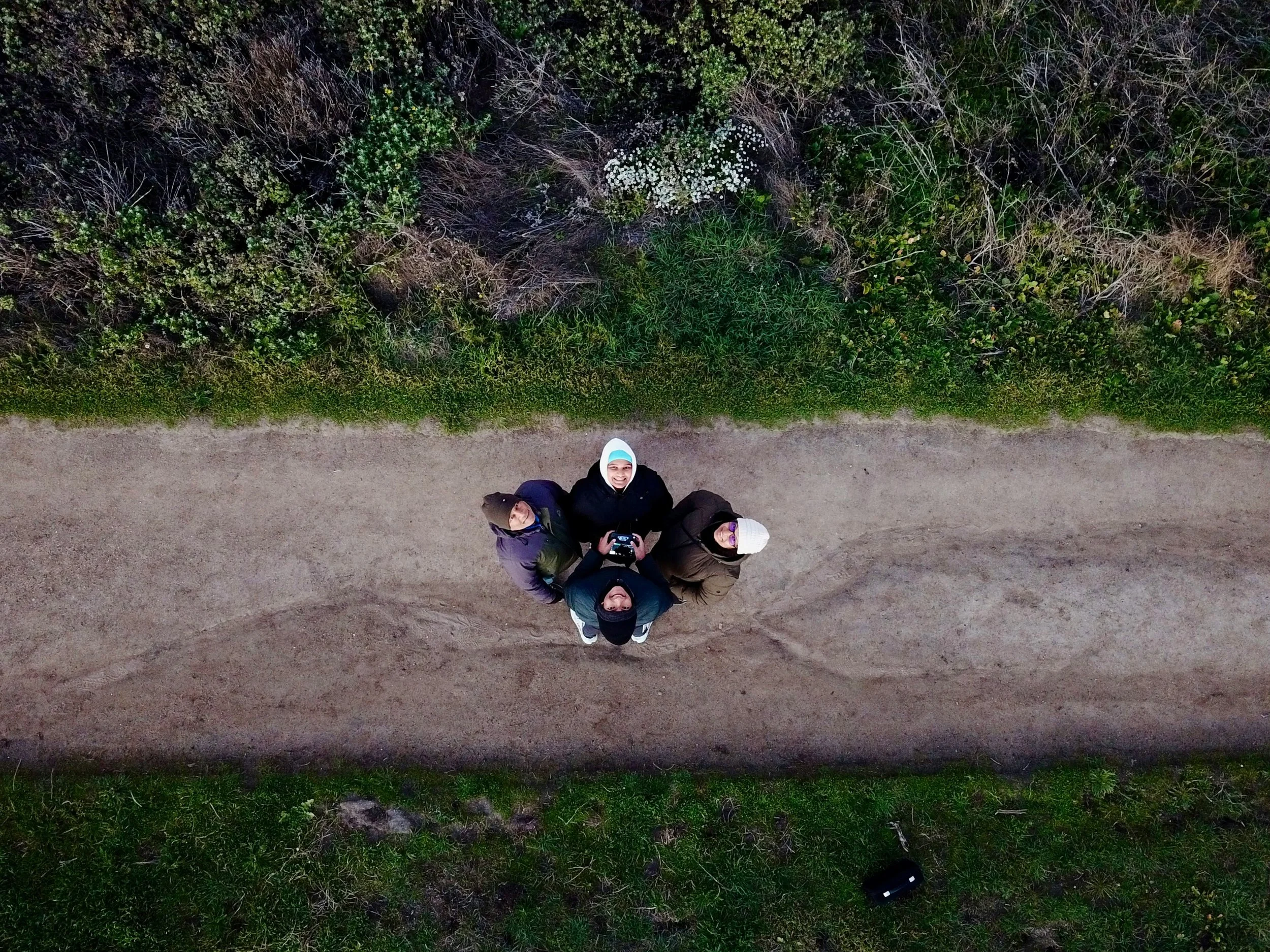
image credit | Ariv Gupta
Season 5, Episode 21: “Earth From Above” – The Psychology of Seeing Our Planet From Higher Perspectives
Thomas and Panu unpacked the emotional and psychological effects we experience when we have an opportunity to see our planet and lands from on high. Artificial borders disappear and natural and human systems and patterns are revealed. Artists, explorers, and land and species protectors have long used visions of “Earth from Above” to raise our awareness and consciousness, and you can expand your own vision too.
Links
Victor Glover Artemis II Pilot
NASA's Artemis 2 pilot Victor Glover listens to 'Whitey on the Moon' every Monday. This is why.
Edgar Mitchell Apollo 14 quote
In 1994, Arthus-Bertrand started a thorough study on the state of the Earth sponsored by UNESCO. As part of the study, he made a picture inventory of the world's most beautiful landscapes, taken from helicopters and hot-air balloons.
The book from this project, Earth from Above (La Terre vue du ciel) sold over 3 million copies and was translated into 24 languages.
Founded the International League of Conservation Photographers and coined the phrase "conservation photography")
Transcript
Transcript edited for clarity and brevity.
Doherty: Hello, I am Thomas Doherty.
Pihkala: And I am Panu Pihkala
Doherty: And welcome to climate change and happiness, our podcast. This is a show for people around the globe who are thinking and feeling deeply about climate change and other environmental issues or environmental problems. But also it's about how to support our own happiness and wellbeing in the modern world, because that's genuine and real just as much as the problem.
So that's where we're at with our podcast. And just before we started, Panu was saying a countdown “five, four, three, two, one” and mimicking what the NASA says when the spaceships go up into space like the recent Artemis mission. And so, our theme today is “Earth from Above” and looking at imagery of nature and the Earth, particularly that it gives us some perspective and how that's really positive for us. This summer, can we stop to think about this? Can we stop to think about this overview effect and Earth from above? Can we use photography and imagery to recharge our batteries when we're feeling down or disconnected? So as we start as I start to open up that conversation, Panu, what’s coming up from your side in Finland and from your recent work supporting environmental activists?
Pihkala: Yes, in my work life I'm still continuing with the Finnish Youth Research Society. The research about young environmental activists and experiences of repression, including threats of criminalization. It's been interesting work interviewing these young people and publications will follow at some point. The general topic reminds me of my earlier fascination with taking photographs myself. I sort of awakened to that when I was around 18. The National Geographic magazine was actually influential for me. Jim Brandenburg, the American photographer who lives in the Minnesota woods, in terrain roughly similar to Finland actually, has an attention to detail and ways to compose photographs that was fascinating and led me to take slide photos back in those times. That was one type of film that you could then project with a machine to the wall and the image quality is very good, but it requires certain handiwork then to make the images with the displayable ones. That hobby also led me to visit many photography exhibitions when I started studying in Helsinki and some of those were quite influential also and it shaped my views about environment and social justice. So, the topic also links with those themes including some issues that we also discussed earlier like space travel and the historical importance of those photos of Earth from space.
Doherty: Mm-hmm. Yeah, no, I think it's great. And I'm glad you mentioned National Geographic because here in the US, I guess around the world, that is a publication that has brought the power of imagery into people's lives of nature and our other species and different cultures. It's such a paradox, because right now, there's a lot of negative news coming out about various wars and repressions in the world. And just kind of the inhumanity that humans can show to each other, but then there's this true tradition of a sense of beauty and love for nature. And so, I think it's helpful for listeners to just stop and just think about that because Panu mentioned this book Earth from Above by Yann Arthus-Bertrand, which many people have seen. This book is basically pictures of the Earth from the air looking at the beauty of landscapes of various kinds. And that book came out in 1999. And I have a huge, big hard copy of that here at home, as many people do. I guess it's a form of biophilia. It's a form of natural connection to nature that we like these images around us. And so, it's nice to just think about that. I've been thinking a lot and researching about the Artemis moon missions and the different Earth from space photos that are so powerful and epic making. Some of that was accidental, the stories are just interesting. The Apollo eight mission with that famous Earthrise image, the astronaut Andrew said “hey, hand me the camera. Look at that. There's the Earth. Holy smokes”. Cause they're looking at the moon, right? They're pilots. They're test pilots shooting toward this objective. They weren't going into space to take pictures of the Earth. And there wasn't even a sense that that was something important to do, you know, and that was just accidental, with this Hasselblad handheld camera, but yet it becomes one of the most shared photographs in human history. That's a real fact. And the blue marble image, you know, from 1972, the real nice one. That these are the most shared images in human history. They're free because NASA is a government agency in the US and those are in the public domain. So, you or I could just post those on our website anytime you want. That's also very special and nice.
So anyway, I think it's just nice to recognize that apparently the recent Earth set image that Artemis took, which is also a beautiful image, was planned like they were consciously setting that image up because they were aware of this. So, this whole idea of the overview effect that, you know, our astronauts have these numinous feelings of brotherhood and sisterhood and connection to the Earth. We know this. The astronauts know this. That’s a positive evolution in our species, don't you think?
Pihkala: Yeah, the element of surprise was there and there's many stories of those early space flights where the astronauts describe spiritual experiences. The experiences are so powerful that they go to this deep dimension and from space there's the vastness of black space and then this colorful jewel-like planet Earth. And then if we go into the atmosphere of the Earth, like satellite imagery, which has also opened many new horizons and of course also the effects of climate change become more visible from those images, and the Earth looks different from there compared to maps drawn by humanity. Those borders which are so powerful cognitively, they disappear in the satellite images, and the more natural borders become visible. And at least for me and I know for many others, it has spoken of unity between regions and also between people. There's not so many boundaries visible from those spheres.
Doherty: Mm hmm. Yeah, exactly. We see ecosystems, we see bioregions, all that we see river drainages, river valleys, we see the cultivation of plants, we see the water, and all these things, which again are real. And this human map that we have superimposed is real as well in its own way, but it's really nice. It's an alternate consciousness, right? It's an alternate form of consciousness. and that means exactly what it means. We see the world in a way that expands our mind just the way people do psychedelic journeys or have religious epiphanies or transpersonal experiences. It's hard not to have that when you have these real time images of seeing something. Like when you climb a mountain peak, we can get the overview effect. You see all the land stretching around you, because you're actually there. Like you're not making it up in your mind. Like this is actually true. And we can get the overview effect from the window of a plane or a tall building.
So, it is helpful to think about what we do to alter our consciousness in a positive way to get views that get obscured. And then it also is religious for people so that's genuine and honest. The even in the recent Artemis, you know, there's a lot of Christian religion type discussion in the control room there as the integrity capsule was going around the dark side of the moon you know they said “godspeed” and you know Victor Glover the pilot of the Artemis, know, Navy fighter pilot, first African American to be in the International Space Station. He's been kind of an unexpected celebrity of Artemis. He’s also a Christian and has many children, a number of children. And he's really being honest about it, we're going to love you from Earth, and we love you from the moon. He's always using words like love and all this kind of stuff. He has these great quotes like “would love it if we all could agree for that time, just be humans. I'm challenging all of us to think more about unity”. So, he's taking on this spokesperson role, which is really, I think, genuine.
Pihkala: Yeah, and this theme of unity is of course highly significant and something that's great global photography also testifies to. I think that element is there with Yann Arthus-Bertrand showing people from around the world in very different environments but still clearly part of the same human race if I think about some other powerful photography.
Doherty: Mm-hmm.
Pihkala: For example, Sebastião Salgado, the photographer who traveled a lot in very difficult circumstances among people suffering from various injustices. He had a life mission of testifying to that injustice and also testifying to the unity of humans in various places and evoking empathy for people who had to work often in quite difficult circumstances indeed. So, it's a wide range of effects that photography can have and can take from the local to the global, from space, from the atmosphere and just the ability and possibility to have another view on life and Earth is highly significant, I think, and may shelter us from becoming too fixated on only one way of looking at the world.
Doherty: Mm hmm. Yeah. Well, I was kind of urging us toward the positive evolution, Panu, but I can see that you are dragging your feet there. You need to bring in Salgado and the pictures of the people in the mines!
Pihkala: Yeah. Our division of labor in this podcast works again!
Doherty: Yeah, yeah, exactly. And that's fine. There's this creative tension all the time. But yes, we could have a whole episode of guests just on famous photographers and then going back to just nature and you know imagery in general. The eye of the photo person and Salgado Edward Burtynsky, the Canadian photographer that takes these big, massive pictures of like techno landscapes, that also is kind of an Earth from above, where it shows us like the hugeness of like huge factories in China and huge like land dumps where there's like millions and millions of old, you know, rubber tires that are just sitting at a dump, the scale of techno industrial civilization. Yeah, so there's all that as well.
But let's stay up in this. Let's keep our head in the sky here for this particular episode. We get a lot of those troubling images in the news every day. So, there's that division of labor in our own minds of like, how do we think about 360 emotions and how do I make sure I can legitimately have my healthy positive emotions every day, not just lapsing into despair about the depravity of some humans so I think you know that that active coping that we have to do for not only for ourselves before our children. I have that Earth From Above book that I bought, and I actually gave it to my daughter Eva as a gift for an Earth Day when she was younger. And now we just have it sitting on a shelf. It's gathering dust, but it's kind of nice to bring it down and look at it. And so, thinking about children and how children and young people need these images and these messages and to know that people are saying this stuff.
I think it's powerful that the astronaut figure who is generally idealized in American culture, like Victor Glover, is able to say things like “this is an opportunity to remember where we are, who we are, and that we are the same thing. We have to get through this together”. I mean, that's real. And that gets into classrooms and filters into society. So, in addition to the spiritual stuff, then there's the protective. There's the impulse to protect, to care and protect the planet, which I think is also super healthy. When I look at these images I don't get an impulse to want to hurt things or destroy things or dig things up. Maybe some people do, but for me, they just naturally prompt some sort of care or gentleness. What do you think?
Pihkala: Or a sense of wonder sometimes. And also, for Yann Arthus Bertrand, many of his photos may show surprising patterns of human activity—in agriculture for example—and there's a certain aesthetic beauty in some of those forms also. There are images which are quite clearly
Doherty: Wonder, yeah. Mm-hmm.
Pihkala: just of striking and beautiful and some are ambivalent but still include beauty and in the academia folks who work with environmental aesthetics have discussed this quite deeply and I sometimes go to listen to those presentations which is interesting they may have some jargon of their own as all academic people do but the beauty in surprising places is one of the themes which comes up from there. It may be that some life forms of nature adapt to things such as not so pretty consequences of human industrialism, but then there's beauty born in those spaces also and that challenges binary thinking about places.
And in my mind, it testifies also to adaptation and resilience. So, it's a broad range of various kinds of images which can be helpful. I think it's very nice to be able to sometimes focus just on more traditionally beautiful nature imagery, whether that is from space or from high places. Ansel Adams is of course an American classic, which is great black and white photography of national parks. So, there's a strong element of photography in environmental protection and activism. It has been used to raise public attention and evoke positive feelings towards far away natural places and let that be recognized and validated here also.
Doherty: Mm-hmm. Yeah. Where do you, in your life, as you live it, where would you go or where could you get the overview effect or this larger view, perspective views, where would you need to go or where do you get that in your life?
Pihkala: Well, technically I wouldn't call it an overview effect, but this wide range, wide scale view I would get from hills. And the Finnish bedrock is very ancient, like 2.5 billion years old, which means that what used to be alpine mountains are now relatively low hills.
Doherty: Mm-hmm.
Pihkala: But we have lots of local elevation changes. They are not just so dramatic. But that means that there's rocky hills almost everywhere in Finland, except some regions. And even as a child, I liked to climb those. And it's psychologically and evolutionary interesting why so many humans, including myself, like to climb to high places and take a look around. And that's definitely been with me for as long as I remember and in Helsinki where I'm living some of those hills are natural and some are actually results of industrial activity like a hill in Vuosaari, a very eastern district of Helsinki which was born because they built a main commercial harbor there and then there was a lot of sand and gravel and stone and which had to be removed and they built a hill with it and then they planted many different species there. So, it's quite a good place for biodiversity even though it's not technically natural in any way. This could lead us into of course complicated discussions about what we mean with nature and the natural but let's not go there. But it also has a very nice view to the east. There are the archipelago and coastline.
Doherty: Mm-hmm.
Pihkala: Lots of coniferous trees, we have many of those. So, I do go there many times a year also, often riding my bicycle and being there with the family and boys also, or taking guests who come to Helsinki. So that's the practical thing to do around here. But I know, Thomas, that the elevation differences are quite more dramatic around Portland where you are living.
Doherty: Yeah, yeah, it's neat. We have Mount Hood. it's just over 13,000 feet. That's the biggest peak and we have a number of peaks on the horizon here in Mount St. Helens, Jefferson, and the Cascade Mountains. Yeah, it's interesting. If you go up to Mount Hood, you can drive up to the Timberline Lodge, which is at 8,000 feet, which is a beautiful place. And then you can see the peak and it's quite a well-traveled mountain, even though it is technical to get up to the top. But there's a smaller little peak to the side of Mount Hood that you could see from a distance, and in between there's a little place that they call Illumination Saddle, which just the name itself tells you a little bit about it. And so, I have been there and camped up there years ago, it is really truly the overview effect because you get a chance to see the sunset and the stars and clouds come in and cover the land.
So, you can't see the ground, you're above the clouds essentially. And then watching the sun rise and the shadow of the mountain with the sun coming behind it is very powerful. It's very powerful. In fact, I really have a strong desire to get back up there. It's essentially a day hike to get up there if you walk on the snow. We don't have much snow this season, so it's probably mostly clear.
So, it does take a little bit of adventure to get up there, but it's within the realm of people’s ability. Yeah, we have those kinds of things. And depending on where you live, It's funny that you can get the, can get a sort of an overview effect. Cause like the under-view effect, if you go out into the desert or into the planes then the sky is this huge sky “big sky countries”. That's another, that's another way that people can get it.
Pihkala: Hmm.
Doherty: Yeah, in the city, I think it's a little more challenging, but sometimes you can even get from tall buildings, you can get a sense of the overview effect. I think it's really fascinating.
Pihkala: Yeah, nowadays of course drones have changed photography.
Doherty: Man, drones. I wasn't even thinking of that. But yes, yeah.
Pihkala: because it gives the possibility for a wider range of people to take aerial photos and some of those are really, really neat. And of course, then we all again encounter the many sides of humanity. Drones can be used for violence or for beauty. There are many options for them, and I have to mention even as a passing note that it's very fascinating what they have been able to find with aerial radar technology, for example, in South America in relation to the old civilizations in nowadays jungle areas. Taking a view of the Earth from above has also resulted in different knowledge and views about human history, even large remnants of ancient civilizations which people did not know about earlier on. but have now been revealed. That it sort of challenges some of the presuppositions of modernity, like that this is the first time in human history when such massive civilizations have been around.
Doherty: There is so much. Yes, so listeners, there's a lot here. I mean, thinking about the care of nature, there's the whole International League of Conservation Photographers, which is a whole other angle of this. And these are people that specifically take pictures of nature and other species to promote conservation.
And so, if you're not familiar with the International League of Conservation Photographers, they have a wonderful website that talks about their mission. That's a place where you might find people using drones to take pictures of landscapes and things. Another photographer is Cristina Mittermeier. She was one of the founders of this League of Conservation Photographers. So, she's an example of a woman who's doing this kind of photography. And I do find there's a little bit of a, maybe a stereotype that men have these big grand grandiose kinds of images where women conservation photographers are turning to focus on more intimate images of animals in action. And so, there's a scale piece here to think about like taking pictures of insects and bees and animals and interactions as opposed to these big epic scale images. So, there's a lot of scale that we can play with here.
There's this great quote that I found in my research recently from Edgar Mitchell, who was an astronaut in the 70s and spent about nine hours on the moon surface in 1971 working. Keeping in mind when they went to the moon, they were only there for a very short time, you know, and they had a few hours to work. But you know, you're on the moon and you can see the Earth in the sky. So, it is really mind blowing to think about. But he has this famous more gritty quote. He said,
“You develop an instant global consciousness, a people orientation, an intense dissatisfaction with the state of the world, and a compulsion to do something about it. From out there on the moon, international politics look so petty. You want to grab a politician by the scruff of the neck and drag him a quarter of a million miles out and say, ‘Look at that, you son of a bitch”.
I love that. I love that quote because it just is so kind of human. It's rougher. It's much rougher than, you know, Victor Glover's nice unity quotes, but it speaks to the same thing. It's like, hey, we got to do something about this.
So, if you feel like grabbing a politician by the scruff of the neck, I totally understand. So, we'll add that to the mix. So yes, I do actually have a goal to go up to hike on Mount Hood this spring and get up to the inspiration saddle. So that is a real thing that I want to try to do.
Listeners, I encourage you all to do your own ways of seeing nature. Again, in the spring and the summer in the Northern Hemisphere, we have these opportunities to get out outdoors, looking at the stars, etc., etc. So that's a good message for our episode today. Panu, do you want to close out this wonderful discussion?
Pihkala: Yes, thanks Thomas as always, it's been fascinating. Always when we go out there's a possibility to find something. Of course, people's places are very different and sometimes it's more difficult than in other places, but there's something which may open up either with a camera or without one. So, listeners, hope you find many things to resonate with your feelings and moods amidst the times in which we are living.
Doherty: Yeah. All right. Well, listeners, I hope you all enjoyed our episode and a little positive boost of energy for you to think about beauty and vision and scale and what we can see and how that inspires us to action.
So Panu, and listeners, and everyone, this is Climate Change and Happiness. You can find us at climatechangeandhappiness.com and send us a note and let us know what you think. Panu and everyone: Be well.