
Season 5, Episode 20: A View From Wales with Marc Williams
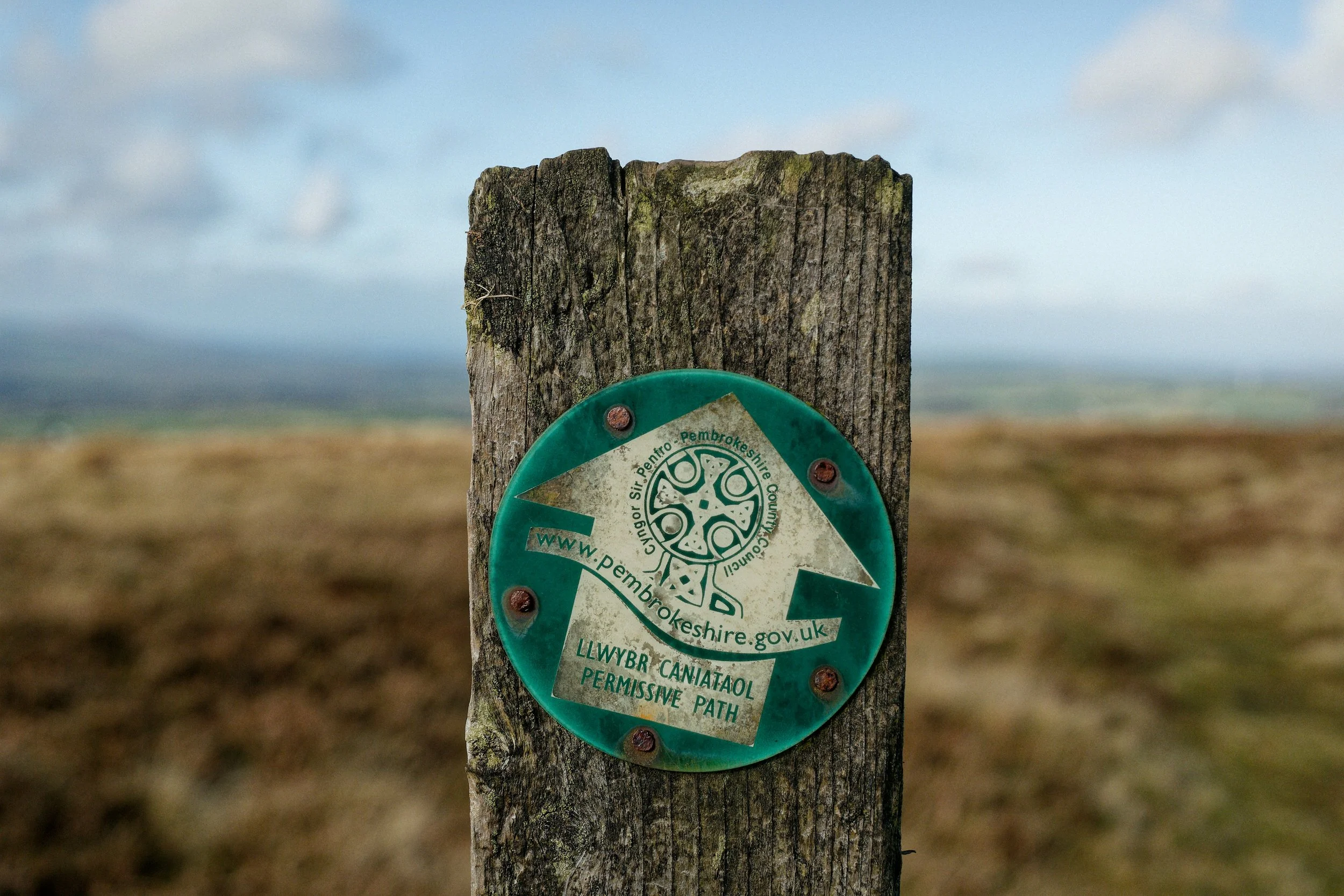
image credit | Marc Pell
Season 5, Episode 20: A View From Wales with Marc Williams
Thomas had a great conversation with Marc Williams, a Welsh-speaking psychologist from Cardiff University, and one of few psychologists who, like Thomas, blends clinical and environmental psychology. Marc talked about his formative experiences growing up in West Wales and his recent research on environmental identity and evidence-based therapy for climate distress.
Some Welsh nature terms and sayings:
“Amgylchedd” – “environment”
“Cynefin” roughly translates to ‘habitat’, but means ‘place of belonging’
”Dod yn ôl at fy nghoed” = ‘returning to my trees’, i.e., returning to a balanced or peaceful state of mind
“Daw eto haul ar fryn” = ‘The sun will shine on the hill again’ (better days are coming)
Links
Key Papers:
Georgia King, Matt Adams, Nick Maguire & Marc Williams (2026). Reimagining clinical psychology for a changing planet.
Jessica Morgan, James Gregory & Marc Williams, M. O. (2026). ‘Taking the green pill’: An interpretative phenomenological analysis of the lived experiences of climate distress.
Marc Williams and Victoria Samuel (2024) Acceptance and commitment therapy as an approach for working with climate distress.
Marc Williams (2023) Climate distress and social identity: bringing theory to clinical practice.
Fire Danger in Wales: Warning after fires near popular mountain ahead of holiday weekend
Transcript
Transcript edited for clarity and brevity.
Thomas Doherty: Well, hello, I'm Thomas Doherty and welcome to climate change and happiness. This is a podcast show for people around the globe who are thinking and deeply about climate change, but also other environmental issues and their connections with nature and all the relations with our life and our beliefs and our politics and our families. And typically I would be joined by my cohost Panu Pikala, but he's been called away today. So it's just myself hosting, but I am very lucky and proud to have a guest with me today.
Marc Williams: Hello, my name is Marc Williams. I'm a clinical psychologist and researcher at Cardiff University in Wales.
Doherty: Yes, and I'm so excited to have Marc here. I've met Marc a little bit and I've followed a lot of his work. Myself, my career has led me to bridge clinical psychology and environmental psychology, study of people's connections with nature and how that plays into our health and into therapy. And Marc is one of the few people I know in the world who has really mindfully and structurally done a similar kind of integration. So we're going to be talking about that. And if you have thoughts or questions, you can always reach us at hello@climatechangeandhappiness.com and recommend our show to people. Marc, glad to have you here. I know you're coming in from Wales and I'm here in Portland, Oregon, we usually step back and start a little bit of our conversation with the person's background story and a little bit of how you came to be doing this unique kind of work bridging these different kinds of psychology.
Williams: Yeah, well it's been a winding path. Can't pretend I always set out to sort of take this path, but you know, I suppose I was ensconced in nature as a child, grew up in West Wales with nature literally at my doorstep and developed that connection and I would say a sense of identity with the natural world in that this is somewhere I was often quite solitary, somewhere I would think about myself, about the world and then kind of through that and I suppose through relationship with kind of my childhood pets sort of developed an interest in more in kind of animal welfare than kind of environmentalism per se. And, you know, that led to kind of personal choices in my life around diet. But it wasn't until, you know, decades later, really, that this became anything of note in my kind of career. became a clinical psychologist. That, you know, that was an interest of mine. And then just had the good fortune, I suppose years after qualifying as a psychologist to have the opportunity to do a PhD in environmental psychology.
So this was, you know, the remit of that had to do with nature. I had obviously a lot of say in the specifics within that. And I also got to do that in Welsh. So, you know, to write that in Welsh and that was actually the condition of the scholarship. So it sort of brought together, I guess, different parts of myself into one project, which is incredibly kind of fortuitus to have had the opportunity. But then sort of was left with more questions about what do I do with this PhD certificate? Is it decorative? Do I just put it up on the wall? or do I bring that in to my career as a clinical psychologist? I'm sort of still answering that question I suppose in terms of you know how do I use this new knowledge to integrate that within clinical psychology, how to help people who are very distressed by climate change, as well as can I have a role in shaping actually the discipline of clinical psychology to meet this challenge. So yeah, I'd say that's been sort of my journey in a nutshell.
Doherty: Yeah, yeah, this is really great. There's a lot of directions we can go. Let me see what was I thinking here? Well, thought we could, among all these things, I thought we could talk a little bit about this idea of eco anxiety, because I know you've studied this and written about this. Now, this is also an area that I go deeply into in various directions, thinking about it, training clinicians, working with people. So I would love to hear a little bit how you talk about this topic. I know for myself, it's complicated. And I think it's important to think about how you get into it. I was just doing a podcast with some other folks yesterday, and people often ask me “Thomas, what is eco anxiety, is it a disorder? And I have to always step back and say, well, anxiety is a feeling and it's a normal feeling that we all have for various reasons and we can have anxiety about the environment. so that's normal, but it could be a disorder if someone is really debilitated by anxiety where they can't sleep or can't do their work or avoiding things.
But I also recently tell people, well, eco anxiety is also more of an identity. Like when someone says I have eco anxiety, it means they're signaling something to other people that they, you they believe in science, they're concerned about the climate. So it's like a statement of, least that's what I think about statement of identity, social identity. And then, you know, then it goes in a lot of directions from there, and then there's the danger of under diagnosing people's problems and assuming that they're all normal when they might actually be debilitated. So I've been trying this validate and engage model is what I call it, where you validate all the concerns, but you engage where you need to more clinically. So I just want to see how that plays out similarly or differently and how you look at this.
Williams: Yeah, well, you're absolutely right in that it's incredibly complicated and my ideas about this are always developing. I suppose with more people I encounter who would say they experience this, even broader than eco-anxiety, just distress, I suppose, because obviously it can take various kind of, have different kind of emotional emphases. But I think that even what words we use like disorder, this is a of a movement, certainly in the UK, it might be in the US as well, what this word even means and the broader implications of locating something within someone rather than within the broader system. And that there's no end to that debate and there's no easy resolution. But I would say that two things can be true at the same.
Doherty: Yep.
Williams: I think that obviously there is a real backdrop to kind of distress in relation to climate change or eco-anxiety whatever term we use but that there's always a personal story as to why someone is distressed and what particular flavor it takes on. So yeah I mean thinking about that you know when I'm working with people who worry about this there's always something to understand in terms of what are you in particular worried about, what is worrying about it for you, how does it offend your specific values and then that leads on to specific kind of resolutions or interventions, ways that can be useful to them.
Doherty: Mm-hmm. Yeah. I love that. I like the idea of resolutions. That's a great way to think about this because that's more open ended. A resolution could be validating students normal feelings because they're studying an environmental topic and or it could be more support or intervening even more strongly with therapy or medication if someone's really debilitated. So yeah, I like that. That that resolutions piece. And It sounds like one of the things you're doing also is really trying to study what kinds of therapy styles are helpful in this in this area and it seems like you've been pretty strong in the broadly in the in the cognitive behavioral realm with ACT therapy and compassion focused therapy. You want to talk a little bit about what you're seeing the trends are and like in the in developing and applying therapies in this area.
Williams: Yeah, it's a really interesting question. The trends I suppose I'm aware of this through some research I'm involved in. I'm supervising a project at the moment that's doing a systematic review of all the different kinds of interventions that are being used specifically actually for young people who have eco-anxiety. And what I find most interesting about this is that most interventions don't have a clear theoretical backing at all and you know that as a clinical psychologist who's had theory and research absolutely drummed into me throughout my training and beyond that's something I'd like to comment on because I think that without theory, we can't really evaluate why something has been helpful. And it makes it harder to have a focused intervention that we could have any hope of being useful in a way that's replicable. So that's what I'm noticing is actually the lack of theory in space. Not to say universally, but in a lot of the papers we reviewed, there clearly wasn't sort of underlying theory that was explicitly articulated.
Doherty: Yeah, yeah, exactly. think there's some general assumptions. It reminds me when I helped start the Eco-Psychology Journal some years ago, trying to do an academic journal in this area and many people came in not really wanting to be questioned about their work. They just would make a statement like, well, the planet is in crisis and, you know, and then, you know, we'd say, well, what way is it in crisis? What do you mean by crisis? And there was a lot of received wisdom about, obviously in crisis, why should I have to explain this to you? So yes, it sounds like you're trying to trying to parse that out a little bit. What are you finding or what are you thinking in the theory realm?
Williams: Yeah. I think so. So I mean, you know, I suppose I've got to own up to obviously my own lens here and preconceptions because as you say, I come very much from a cognitive standpoint and I rely a lot on my prior knowledge of cognitive theory, broadly speaking, and that includes things like standard cognitive behavior therapy and offshoots you could argue to various extents, like Acceptance and Commitment Therapy (ACT), and the one I really find most useful, Compassion Focused Therapy. More and more, I think that is a really helpful framework to understand many of the themes that arise in eco-anxiety and climate distress where I find almost invariably there's this high level of kind of self-criticism, extremely high standards, a kind of a burden of responsibility that people are carrying to the exclusion of considering other people's roles and I just think I found some that that's useful in my clinical, I'm trying to write up a case study at the moment using that kind of framework because I think that what's inherent in this idea of compassion is helping people to not just kind of be alert to kind of suffering and people usually are, but their own suffering as part of that and to extend the same compassion to themselves that they clearly have for other people on the planet.
Doherty: Yeah. So listeners, you know, we're talking and there's a lot of therapists in the, in the, listening group that will, will understand this. My understanding of compassion focused therapy, it often comes down to that three, three level model where we have the part of our nervous system that's approaching things and wanting things. and then there's the threat part of our nervous system that's protecting us. And then there's the soothing part, the calming part, the parasympathetic nervous system and the oxytocin and these calming neurotransmitters. I've used that in therapy a lot myself. And I always find that It's very easy for people to say what threats they're facing. Everybody's got that top of mind. And then every day they're approaching something all day, their job, their family, they're chasing things especially in kind of capitalist society. We're taught to approach. But when I say well, what are you? What are you content with or what do you calm yourself with?
Williams: Yes.
Doherty: Hmm, I don't know. I don't know. And so, that's a super useful theory. know, so, yes, and that that's like this podcast, you know, we're asking like climate change and happiness, like, when are we happy? And, you know, our happiness muscle is pretty weak, we might say, or pretty beleaguered.
Williams: What is that? What's content? Yeah. Yeah. Definitely. I think that's actually one of the reasons I really like that model is that it's one of the tests of a good theory. I think it's just how useful it is and how much it explains things to people. Therapeutically, you need that to be quite an intuitive understanding. I don't think you want something too hifalutin. You want something that people can immediately connect to. And I find it quite versatile, actually, because some of the specific kind of recurring challenges, I think, for people who are very involved in the climate movement that have to do with just the social psychology of caring about something that others don't as much or aren't as willing to talk about. And you can actually apply that idea that we have three basic emotion regulation systems to help people understand social interactions that might arise, including, well, you know, why are people shutting down when I'm trying to talk about climate change? Well, maybe their threat system is activated. How can we do this in a way that bypasses that, that, you know, helps people feel, you know, energized in a more of a drive system or helps people feel more of a connection with you that, you know, that draws on the soothing system. So you can almost repeat those three models, I think, in various situations, when you're about various kind of problems that arise from being very climate distressed.
Doherty: Mm-hmm, yeah.
Williams: So it's versatile. you know, generally speaking, I would say I really like anything cognitive that brings in an understanding of why is it that you're finding yourself in a constant state of distress? And I think that another really useful aspect of this is what came out from a recent paper that, again, I supervised, which was a kind a phenomenological analysis of climate distress where people were saying “I should be distressed and it would be morally unacceptable not to be. And also, if I weren't distressed, I wouldn't be doing anything to fight climate change”.
Doherty: Mm-hmm. Yeah. Yeah.
Williams: So that's incredibly interesting proposition and almost, it feels like it almost undermines the entire concept of therapy in this space. So that really gave me pause for thought.
Doherty: Yeah, no, this is really great. And this is something I've been talking about with John Frazier, who we just had on our podcast recently, who works with conservation professionals and zoo professionals who, who are incredibly impacted by stress, protecting wild species and, protecting species in zoos and all the linkages between zoos and wildlife refuges around the world. Zoo folks are some of the most stressed people I've ever met but they don't seek self-care because they're very selfless and into animal rights. And so the care needs to go to the animals, not to me. And I think it becomes a badge of honor in a way. And so, yes, that's a paradox. The people that are most distressed, the climate professionals don't really have a rationale why they should take care of themselves. And then the eco-therapists are sort of like helpers looking for clients and can't find the client because the very clients they want to work with are not really interested in what they're selling.
Williams: Yeah, yeah, absolutely. I mean, you know, the people I've met have kind of come to me via this website, the kind of climate specific therapy website, and I haven't, you know, haven't had to go out sort of looking. But on the other hand, I can see how many people wouldn't even consider therapy. In fact, it's what came up in this paper, you know, the participants were saying “a therapist would just tell me to stop worrying or stop thinking about this or to not spend so much time being active in the climate space”. And I actually think some therapists do say that, you know, that there's some research to show that these are the kinds of responses some people get from therapists who aren't sort of climate aware.
Doherty: Yeah.
Williams: But I think linked to that what's interesting is that some people, they would like to have a therapeutic space, a counseling space, just a reflective space with someone who they know is essentially not a climate denier because that gives that person some credibility and you know that whatever they say to you, they're not saying it because they're dismissing climate change.
Doherty: Mm-hmm. Yes. This is this is stuff I talk about in my book a lot. Both ways to validate people's concerns. “Validate, elevate, create” you know my catchphrase. An example of a young client who is doing activism and I said my previous therapist didn't know what a Keeling curve was, which is the measure of carbon dioxide in the atmosphere, basic climate science. So what they were saying is my previous therapist had no understanding of climate science. Thus, couldn't really, I felt like they couldn't understand me or take me seriously. Yeah.
Williams: Yeah. And I think that also brings in a kind of an interesting question when it comes to the role of the therapist, because what I've found is that there's the risk that almost someone seeks out permission within the therapy space to do a certain thing. I think this can happen with the question of, should I have children or not? Which is very at the forefront of some young people's minds.
Doherty: Mm-hmm.
Williams: where the therapist could be in a position where there's an expectation that they'll say, yes, you may. You know, I'm not a climate denier and I know what the science says and I still think you're okay to go ahead. Where I actually think therapy can be hugely beneficial, not obviously in, you know, giving people any kind of advice in that direction, because I don't think that's the role of therapy, but in helping someone to understand “What are the factors that you're drawing down to help you make this decision? How much are you relying on your view of what's right and your kind of intrinsic values? How much are you relying on fear of what others might, how others might judge you either way?” That's another part of social psychology I think of eco anxiety that that is operating for some people is almost the fear of judgement.
Doherty: Yes. Yeah, I suppose that goes that goes in every direction because some people are isolated, which is one of the big risk factors. And so some people are fearing judgment because their very beliefs will be judged by their family or their community negatively, like they'll be made fun of or intimidated even. Or then or on the other hand, they're not they're not green enough, they're not eco enough. I think that's what happens in like extinction rebellion and some of these subcultures. Like then it's a race to see who's the most green, who's going to put in the most hours. who's going to risk getting arrested, that kind of thing.
Williams: Yeah, you know, again, what I like about compassion-focused therapy, is it has the base of—really something similar to existential therapies—that idea that well there are certain kind of undeniable facts about the difficulties of just living and I would say that one of those is that other people will judge you no matter what you do and so with the decision like having children, you know, the truth is that whatever decision you make, someone's going to judge you. The question is, what's your decision based on your own judgment?
Doherty: Yeah. We've got a little more time, so I want to swing back to the Welsh, the specific Welsh context, I think is really unique for you in terms of the language. But I do want to say it does sound like even though you're a cognitive practitioner, a lot of what you're talking about sounds very existential.
Williams: Mm-hmm. I think so. mean it's hard not to integrate things with something so complex and that presents so many different ways. I think I'm always bringing it back to well how can I how can this be expressed in cognitive terms? I like a kind of theoretical consistency, you know, I suppose I'm not in favor of sort of eclecticism, I like the integration.
Doherty: Yeah. No, that's great. And I think in your discipline there is really the model for us moving this field forward to actually be taken seriously among other therapists who do the deep theory work and frankly see, you know, eco therapy, eco psychology is really a kind of environmentalism that's not necessarily done the work to make itself a therapy yet. So anyway, this is really great. Where was I going? yes. Okay. So yeah, let's bring it out into the world. You mentioned there's a new government in Wales. And so I want to bring this into even how you think about your role in society as a person yourself as a citizen. But also, did you notice special things about doing environmental psychology or eco therapy when you were writing and working in the Welsh language versus English?
Williams: Yeah, first of all, I don't know if specialist is the word for this, but just the added challenge was almost like a personal challenge to translate concepts into Welsh because I learned Welsh in a non-academic context. After school everything was in Welsh. In school, my degrees were in English up until the PhD. So, you know, learning to translate concepts was an added sort of challenge there. But I think that one of the interesting things is just thinking about what kind of language embodies in terms of nature because what I found was when I was trying to translate certain concepts you realize that you could only go for an approximation with some things and that you know which is an odd thing to say
Doherty: Mm-hmm.
Williams: It even makes you think about what does translation even mean in that case, you know? Words like Cynefin, which I guess again loosely translates to habitat, is a word we use to describe sort of the place where we belong. I think it just sort of shows in my mind that the history of the Welsh language and maybe of the Welsh people is one that's quite close to the natural world. It's possible that I'm taking this reasoning too far, but it sort of led me down a path of thinking, does that mean that almost our identity has been more close to nature in terms of how we conceptualize ourselves?
Doherty: Mm-hmm.
Williams: If we're ready to refer to our own environment as a habitat, that means seeing ourselves as quite similar to the natural world. Actually this was kind of the topic of my PhD was part of it was nature connectedness. Part of my thesis was that we should conceptualize this within kind of social identity theory. That nature connectedness reflects a sense of social belonging to the natural world, like we'd belong to any other human group.
Doherty: So in Welsh, the word for environment is habitat. The use for the word that we, the English, use environment. Is that how that works?
Williams: So it's different. So the word for environment is Amgylchedd, which actually literally means the same as the word environment. Guess it's like the French; it sort of refers to stuff that's around us and it's the same in Welsh. Amgylchedd is like stuff that is circling us.
Doherty: Uh-huh. Yeah.
Williams: Whereas Cynefin is more specifically, you know, refers to kind of a place where you as a person might belong, you know, like your kind of your hometown or your culture. it's more abstract in some ways.
Doherty: Mm-hmm. Yeah, I love it. When I went to New Zealand, I learned about the Māori language and the idea of Tūrangawaewae or standing place. This really rich concept of my standing place where my tribe or my iwi is located and are in place. And then I have a certain authority and protection over that space but standing place I love because we can also form standing places too. We might not necessarily be gifted one by our culture, but we could choose a standing place, which then moves into stewardship and being connected and rooted and having a sense of place. And so it sounds like you worked with all those kinds of things.
Williams: Yeah, I mean, you know, not much of this came in. It's quite, you know, it's a psychology kind of PhD, so it doesn't really go much into those other things, but it sort of sparked those ideas. And Māori is interesting, because I think that's the place that's just that pushes Welsh off the perch for having the longest place name. I think maybe in Māori they have the longest and then Welsh comes second. But place names are another interesting one. In Welsh they're very kind of, I think they're called toponyms, so they always refer to, not always, but a lot of the time to geographical features.
Doherty: Uh-huh. yeah.
Williams: Which is also interesting because some of them, those purported geographical features no longer exist. what's encoded in the name is almost like a past that's no longer there.
Doherty: Yeah. Like the path that crosses over this river or something like that. Yeah, exactly. Yeah. Well, that's as fascinating. There are so many directions we can go. I want to wrap it up with something practical. And I think, I believe it's positive, but we'll see. You talked about some new government changes in Wales.
Williams: That's it.
Doherty: And do you see that as being helpful for Wales in terms of it as a nation and in terms of, you know, adapting to climate change and things like that?
Williams: Yeah, I think so. I mean, whenever I think about adapting to climate change, I was divided into mitigating, trying to actually prevent more climate change as much as possible, and then adapting. I can see it helpful for both. Certainly, there's more power, I guess, to adapt locally. Obviously, any mitigation has to be a global effort. But Wales is very vulnerable, especially vulnerable within the UK to flooding. So there needs to be enough funds within Wales for council for example to kind of not just react but to prevent damage from flooding. I don't feel that there has been enough of that thinking up to this point so that my hope is that the new government will take that seriously.
They certainly came on board on a platform of you know being more climate conscious than I'd say previous governments and I think we just have such a problem with recurring flooding where an area might experience flooding over and over again over many years. So that's the kind of thing I'm hopeful about, that there could be better preventative approaches for those kinds of problems that we have.
Doherty: But it sounds like they're generally aware of the problem and not a denying style of government.
Williams: Yeah, I don't think they're denying style. They're very kind of concerned, I'd say, conservation in general, including language conservation. I think they feel like they kind of go hand in hand. I also don't want to sound like a spokesperson for any particular kind of government. It's just time will tell, isn't it? I don't know what they'll be like. so far, there's a lot of positive energy coming out. essentially, their main aim is to try and decentralize power more from Westminster so that Wales has more control over certain functions. At the moment, it's only certain things it can do with more kind of devolved powers and not to get too technical but renegotiating a specific formula that determines how much money we get. Which at the moment is I think there's a compelling argument to say that it's not enough. So with more of those powers I think we'll be more freed up to adapt to climate change.
Doherty: Yeah, so some more self-government more autonomy, which of course plays into a long, long, long history, which we won't have time to get into. But, yeah, but it's a really proud and interesting culture. So it's really neat. And I love the language piece. Well, we're going to wrap up for now. We could easily go on as we always say so many things.
Williams: Yes, yeah.
Doherty: Marc, I just really am proud of your work. I think it's really great what you're doing. It's very inspiring. And we're going to have a bunch of links in the show notes if you're interested in some of these research studies that Marc has been working on. They're very helpful for eco therapy people. So we'll put some links in there and I'll make sure to get some of those Welsh terms properly spelled for our transcript and for our show notes.
Williams: Yeah.
Doherty: And anyway, Marc, what are you where are you going for the rest of your evening there?
Williams: Well, it's turned into quite a sunny day, so I imagine I'll take a nice little stroll on my way back home. And we've got a bank holiday weekend here, so we're looking forward to just a long weekend of relaxation.
Doherty: Alright, well that's great. We're recording around the Memorial Day holiday here in the US, so we actually have a longer weekend too. So it's that time of the season where people are turning to the outdoors, at least in the Northern Hemisphere. And so here's wishing a good season for people and good and safe season. And Marc and listeners and everyone, Panu, where you are, be well.