
Season 5, Episode 18: Supporting Wildlife and Conservation Professionals with John Fraser
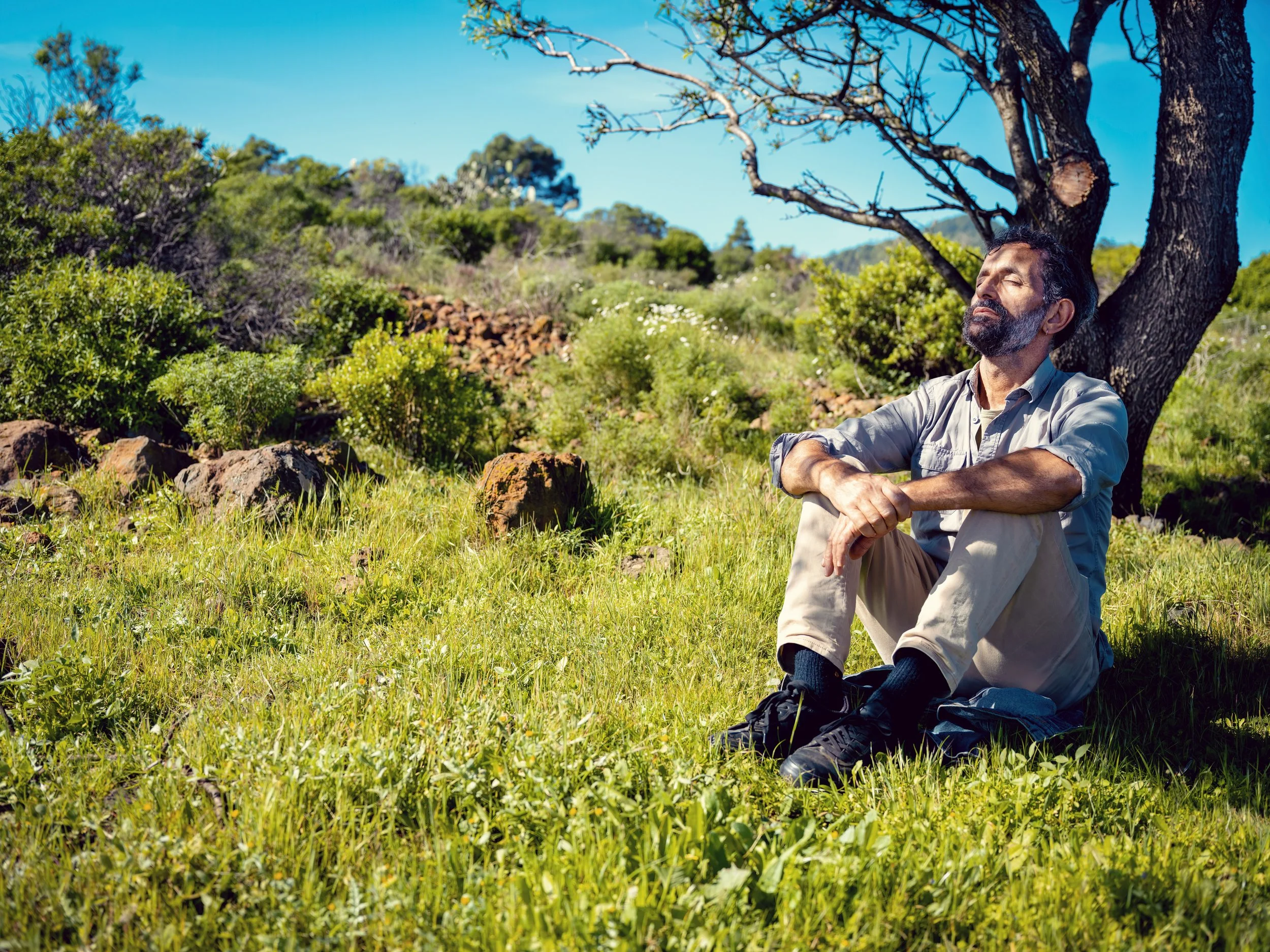
image credit | Christian Buehner
Season 5, Episode 18: Supporting Wildlife and Conservation Professionals with John Fraser
Thomas and Panu had a stimulating and wide ranging conversation with John Fraser who reflected on his career as an architect, zoo and museum designer, pioneer in conservation psychology, and creator of innovative nonprofit knowledge and conservation groups. We focused on practical ways to support wildlife and conservation professionals amidst the emotional toll of their globally important work. John also spoke about how social cohesion and community bonds build resilience in small towns like his home in Seward, Alaska.
Links
Also cited:
Nathan Geiger's work on active hope (Geiger, Swim & Fraser, 2024, With a little help from my friends: Social support, hope and climate change engagement)
Recent CCH episode with Britta Eklöf on the Challenges of Activism and Staying Involved
APA Div 34 Society for Environmental, Population, and Conservation Psychology
Transcript
Transcript edited for clarity and brevity
Thomas Doherty: Well hello, I'm Thomas Doherty.
Panu Pihkala: I am Panu Pihkala.
Doherty: And welcome to Climate Change and Happiness. This is our podcast show for people around the globe who are thinking and feeling deeply about, well, climate change, obviously, and other environmental issues. And we asked this provocative question about, you know, what does it mean to be happy in the modern world? And when we started this podcast a few years ago, happiness wasn't typically, you know, equated with climate change. But lately I've noticed that, you know, people are aware of the need for resilience and kind of positive support. So, I feel like we've kind of helped to move that conversation forward a little bit. And we are really honored to have a special guest with us today.
Fraser: Thanks, I'm Johnny Fraser. really appreciate you inviting me to your podcast. I'm gonna start again, sorry, I did need to start again. Thanks so much for inviting me to your podcast. I'm John Fraser, I'm a conservation psychologist based in Seward, Alaska, but I also spend a lot of time in New York City.
Doherty: Yeah, and I'm so glad to have John here. I have known him for some time. Actually, we met while we were both in our graduate studies, and we'll talk a little bit about that. And John is really a true polymath. He's an architect, and he's helped to advance the field of conservation psychology, and he's worked in museums and with zoos and aquariums, he's run nonprofits. He's been at the Alaska Sea Life Center in Seward. So, lots we can talk about. Panu, do you want to get us started?
Panu: Warmly welcome John, also on my behalf. Lovely to meet you. I've known your work for many, many years, both in relation to the emotional impacts of doing environmental and conservation work. That was helpful when I was writing an English paper in 2019, but you worked on that a lot earlier also. And then I've been doing a series for Finnish environmental educators about emotions and environmental education. Some of your work and work by you and your colleagues has been highly helpful. So lovely to meet you and we'll talk more about emotions in this podcast. But first I'd like to ask you something about your journey towards a person having so strong environmental values and identity. So how did that happen for you?
Fraser: Obviously, you're talking to a fellow who's retiring next month. So, thank you so much for saying you're actually looking at the things I've produced over my career. It's kind of funny to look back when people talk about my origin story because I've often said, you know, I'm just one of those shallow people that follow shiny objects. I was born Canadian in southern Ontario in Haudenosaunee lands, which is near Niagara Falls and spent in an industrial town, steel town, grew up very close though to one of my father's best friends and we spent a lot of time on his farm. I spent a lot of time with, you know, cows and horses and I didn't know about zoos at all. So, when I became an architect and was pursuing a career in architecture, was working all over the world and was asked to work on a zoo project and they there are a bunch of horses that had kicked down and eaten their barn, which I found unusual. And so I remember saying, that doesn't tell me more about these horses. Tell me about their behavior. I don't understand these horses. I learned about what are we're called Przewalski's horse at the time but are now called Mongolian horses because they no longer use the Eurocentric way of framing it. And these are these tough, tough little animals that are very aggressive. And I said, well, this is unusual, but it's a horse. And so let's think this through. And they were surprised to have an architect to immediately jump to animal behavior before you start to build a barn. That turned into an incredible relationship. And they created my career for me because I was a farm guy, I said, it's a zoo. To me, that is a farm. It's just has a lot more people looking at critters. And as they started talking about the work they do in conservation, or what conservation was, I wanted proof. So I've been one of those people that just asked questions, prove me how it works, show me the way. That that's how I ended up in zoos and aquariums.
Doherty: Mm-hmm.
Fraser: I was designing master planning, found myself at the Oregon Zoo, and then after the Oregon Zoo, I worked in some advertising for a while on some children's media work, built a children's museum, and was recruited to go to the Wildlife Conservation Society in New York City. It was when I was there, just in that transition period when I was working for the ad agency, that I met Stephen Keller and Carol Saunders. We were together at a conference—both Carol and Steve have passed—and so I'm honoring them by saying there was far too much wine one evening and we spent a very late night with very good wine talking about the problem of environmental issues, not being about the science of nature, but about how people behave. And that really was, I think around 2000. And so Carol and I kept that conversation going. We ended up co-teaching at Antioch University. And that's where the idea came to invite a bunch of psychologists to get together. And that led to the conference that became Conservation Psychology. In parallel to that, I was pursuing a PhD at Antioch University where I met this other fellow, Thomas Doherty, who shared an advisor. And I remember sitting with my advisor early in my school career describing my work at the Wildlife Conservation Society.
How a cup of coffee tipped the balance of what was going on in a meeting. We had a new ad agency show up. They came in, they brought donuts and Styrofoam cups full of coffee for everybody as hospitality. And one of our senior curators slammed the table down, said, these people are morons. I can't work with them and walked out the door. And I was talking to Vic Pantesco about this, my advisor. And he said, that seems an awfully extreme emotional reaction. And I said, well, believe me, you know, she was upset that they would come to a conservation meeting with Styrofoam. It was just, you know, it was to her a slap in the face of all the work she does. And so we talked more about what that, meetings looked like. And Vic said that appears to be an environmental emotional trauma that they're living through and are having difficulty processing. So we went out and did a study.
Doherty: Yeah.
Fraser: This was back in 2005. And that study mapped PTSD to the experience of environmental loss for people working in frontline conservation. It took us from that time seven years to publish that paper because we were laughed at. And this becomes my career, by the way. So I became a conservation psychologist simultaneously with identifying this traumatic issue of understanding environmental change.
Doherty: Mm-hmm. Yeah.
Panu: Mm-hmm.
Fraser: When we first presented that at the Society for Conservation Biology in 2007, you would normally do a presentation to a whole bunch of conservation biologists and they politely clap and we talk about the decline of nature and the collapse of the world and everyone claps a little bit and then they all move on and go get coffee. And we presented and you could have heard a pin drop in the room. The room was packed. A pin would have rung around the room. And finally, we started to hear a little bit of sobbing, and somebody said, you mean I'm normal?
And this became, there were no question and answer. It was very simply people saying that rings true to my life. That this is a trauma I carry in my pocket every day. And that gave us hope. To be honest, that shaped my inquiry into what gives people in environmental work hope. And that's the papers that I think Panu, you were talking about working with. Understanding how we can prevail. What does hope, what is the shape of hope? And how does it work within communities and groups and what does social support look like? And so that became, you know, my next career. I ended up leading the wildlife conservation society and created a new nonprofit called Knology, which is a transdisciplinary social science think tank in New York city and ran that organization until I retired in 2022. That changed the world. I got de-tired. I moved to Seward, Alaska for three years, which I'm just winding up right now to help a small conservation organization in Seward.
Think about the social sciences. And I can say proudly today that I live in the 10th happiest city in America because I did the study. I tested to see how happy is Seward. It is the most beautiful place in the world. It's economically stressed. There is a housing crisis. I live in a town where some people don't have indoor plumbing and where heat is a negotiable in your lease. That you may not have heat. It may be wood fire. It's a small village. It's a summer tourism site that is very busy in the summer, but only 2500 people in a fjord. So it's but it's just beautiful. And what we learned was that people are so attached to nature that that is what gives them resilience. That's what makes them feel secure, even if they live if they are housing insecure, living at the low end on subsistence lifestyles, and often in dry cabins with no access to plumbing and no indoor facilities. You know, it’s an outhouse and this is the way people live their lives. But people who are on the lowest end of the income spectrum in our town feel seen, heard and respected by those at the upper end. We're a town that believes in each other and supports each other. 95 % of people who live in the town where I live now volunteer and donate to nonprofits. And we see this sense of social cohesion that is so powerful that it gives me joy and feeds my soul.
Panu: Mmm.
Fraser: So this is why we decided to divide our time between our apartment in New York City and our place in Seward, Alaska.
Panu: Fascinating to hear. Thanks a lot for sharing all that.
Doherty: Yeah. Well, Panu, I know you have experience with small villages and fjords up there in Scandinavia, in the Nordic countries.
Panu: We have lakes more than fjords.
Doherty: Yeah. Yeah, yeah. Okay. Fair enough. Yeah. What are you thinking about Panu as Johnny is telling this great story?
Fraser: that regions have keywords.
Panu: Yeah, it's moving to hear about the sense of recognition and validation from that silent room. And it's been a big paradigm change in the 2000s in relation to recognition of psychological impacts of doing environmental work. And of course that work is still ongoing and paradigm change hasn't happened everywhere, but situation is very different than it was during those times that you John described earlier. I'm fascinated by the many things that you have been involved with and sounds like there's a great number of different people, but you've been able to find common teams and what I hear from your emphasis such as working together for the common good and taking care of each other seem important to practically all of these groups and probably also a sense of efficacy that people feel that they can do things. So it's inspiring to listen to you.
Doherty: Hmm. Yeah, it is. I was really looking forward to have you on, John, because I knew we could go in a lot of directions. I think, yeah, I think what's helpful for listeners and for young people is to realize, yeah, as I write about in my book, there is a before time where people didn't think about climate change or saw it as some hypothetical speculative issue that was the same experience I had when we did the first American Psychology Association climate task force we were talking about well, you know, there's gonna be mental health impacts of climate change. It's not just gonna be the disasters and the storms and the sea level rise and it's not just the impacts on polar bears. we were still in the polar bear era where people were thinking about polar bears and melting ice flows and we said, well no, this is going to roll out across the world and across the country.
That was before Katrina had already happened. So we saw, we had a glimpse, but people didn't quite connect that with climate change at the time. But then Superstorm Sandy, and then the fires in California, and the smoke and the heat. you know, so now we know. So the future that we predicted and saw caught up with us. And it is notable that the trauma lens that you described, which seemed so far out at the time is not at all—like if we did that talk today you wouldn't even have to preface it. People would be asking you about that or young people are leading on talking about that. yeah, yeah.
Fraser: well, that's a bit of an American view of it, Thomas. I think that the Americans intentionally lived in a denial space when the rest of the world was already acknowledging that the climate change was real. you know, living in Alaska, we are seeing environmental change at a rate that is four times faster than what you see in the lower 48. And I think anybody that's in sort of arctic countries, Panu, I'm not sure you're seeing the same thing, but for us, our salmon are completely changing their whole patterns and habits. We're witnessing trees where there should not be trees. And we're seeing, you know, I live in a town that has had almost no snow for two winters. Now I live in a very tropical part of Alaska. It hovers around freezing all winter, so it doesn't really get too cold. In fact, it never gets below what in Fahrenheit is zero, but minus 20 degrees Celsius, it never gets that cold. So we're living in a very protected area.
But I think the bigger issue is that America was in denial because climate change threatened the American foundation myth. It was fundamental to American identity that prosperity and opportunity to take from nature was unlimited. And that's not true for the rest of the world where people have acknowledged centuries of change and can see and live with centuries of history. America doesn't live in that world. They live in a world where prosperity is just a replaceable, fungible thing, almost like rainforest regeneration. It's not how nature works. And one of the reasons I think is some of my colleagues that helped us with the National Network for Ocean Climate Change Interpretation when we were first starting that project in the 2000s. We were talking about one of the ways that American denial was supported was a lot of effort to make climate change seem complicated.
And when we the story down to its hub, right, its root. The muck and biota of dinosaur dirt, know, dinosaur poop compressed over time becomes something you can burn for energy. So we do, and we end up with basically dinosaur muck in space creating a heat trapping blanket around the planet and that's making it too hot. And once we could say that to a six-year-old and they understood climate change, we said, we don't think we should have dinosaur muck in space. Kids were like, totally bad idea.
Panu: Mm-hmm.
Doherty: Yeah.
Fraser: You know, we don't have to make things complicated. And think I've been very fortunate in my career to say we can simplify a lot of these basic concepts. Right. And often it's the sense of loss of love or acceptance or your foundation myth that is troubling. And if we get to that deep space of where people are and where they find love and how love defines them, then we have the opportunity to give them hope. So that's my career summed up in a sentence, and I guess we're done.
Doherty: Very well said. Very well said. Yeah. It's great. Where should we go here? I feel like there's so many. So I'm just enjoying listening to you, John.
Fraser: Well, why don't I introduce something you may not know I did? Because I worked with some colleagues at NOAA across all of the federal agencies back around 2001 to convene meetings of agencies and nonprofit organizations to think about how we measure environmental education in relation to achieving the agreements of the Paris Accord.
And in developing an understanding as a consensus the group came to realize that in the United States the territories of sovereign nations within its borders were first of all a different framing of what is the United States, what is America. It was not 50 states, it was not Congress, it was a border, a geographic concept that we all agree exists but may not necessarily agree with. But inside that there's a lot of tension around what is governance and what is our relationship to nature, that we need to reframe the understanding of how we talk about nature and sustainability.
And since then I'm inspired by my friend Janet Swim when she says, “I don't want a sustainable marriage. I want a thriving, passionate marriage that lets me live to my fullest potential. And why would I want sustainable nature? Why wouldn't I want a thriving nature that lets me live my life to its fullest potential?”. And so we've got to quit describing sustainability as if we can maintain what's wrong today, because that's okay. That makes us comfortable. Let's admit that we have gone through a strange relationship to nature. It is at a breaking point, like any divorce and if we really want this to work we need to think about what it is to thrive and to get there we need to heal the harms and so working with First Nations peoples or coming from Canada First Nations peoples in the United States who would say you know indigenous or the Native American population. Now I'm in Alaska working with Alaska native groups.
So when we talk about environmental identity. The Western European approach has been to think about environmental identity as an exchangeable part of who I am. It's like I have many other identities in different contexts and it's a measurable, describable thing. But when I talk to people who are from Indigenous communities, those are not separable parts. Nature and me are one. They exist and there is no way to unpack them as separate because my way is the way of speaking about nature. And so when I use in the place where I live on now on Sugpiaq lands, which is the population from the Kenai Peninsula, using the American term. So to be, you know, Chugachmiut from the Chugach forest people of the Chugach, you know, that basically says “we're the people here”. But here is who we are. And that's the part that is so complex in Western European framing to think of me as of place, of nature, of this nature, and therefore when I think of things converging, I use words that also mean rivers and estuary. There's no difference between estuary and my family or ideas that come together. Now I'm saying that really simply here, okay? So there's a whole lot of cultural baggage here that I would need to learn more about to talk in any more intelligent way about it, but I've been enjoying learning the language in part because it's helping me rethink how close colonial structures influence the way we see the nature around us.
And the colonial nature of English itself, the way we describe things, the way we describe places is patrimonial. We describe something like, mean, I'm, Panu, you're on this this call and you think about how Patriarchy includes last names. yet, and so when we describe places or real estate, we already describe ownership and we set preferences and that is not the way the language even works. So it means that we have to have a different relationship. When I describe you, if I say to someone today, you're a cow.
That's considered in English an insult because we treat language like animal names as pejorative. You're an eagle would be, you know, honorific. So dances with wolves was great, but we wouldn't say dances with cows. Dances with cows would be pejorative. But if someone is looking at that through the Alaska native lens, that is an honorific. To be the nurture, the giver of life, right?
Doherty: Mm-hmm.
Fraser: So, you know, here we are, you know, in the English language, swine or pig is, you know, the most variations of use of a word to insult someone, right? There are many different ways to use it, but it's always an insult. It's never honorific to call someone a pig. Well, I'm going to say that there are some parts of the sex world where that's actually a positive term, but I'm going to say that these are generally considered negative terms. So I think we can think about this concept of thriving as an aspirational end goal, but really healing is a place where I think the conservation and environmental movement can help think about mind and mental process.
If we put ourselves in the space of needing to participate in healing and garden, we move into a space that is hopeful because it's action hope. And that's really Nathan Geiger's work. You know, working with Nathan on this on hope, this idea of action hope, something that is very targeted, specific and has an outcome that may not be in my life. Whereas W.S. Merwin has said on the last day of the world I would want to plant a tree. That there is this act of something I will never benefit from but if I do it, I create benevolence. I create an opportunity that is not about me. It's that transcendence beyond self. And so I think people can move into that space rather quickly when they feel that they are loved for what they are and what they contribute. And too often I think in the conservation movement, when we say I want to sustain something we cling to the idea that it's okay to be the way we are today, it's good enough. But I don't think our nature should be good enough.
Doherty: Yeah, this is great. This is great, John. I really appreciate it. mean, listeners, know, this is, well, this is what's nice about this podcast. We can have these deep conversations. You know, in my book, this is very validating to me because it's kind of what I tried to parse out in my book, you know, how to sequence flourishing and healing and identity and action. As I talk about in the book and with teaching, there's kind of level one and level two to all these topics. So level one is, yes, I have my environmental identity, and we have these Western assumptions about what identity is. But level two, again, is that it's different for different people and it's much more complex. And we all know that we can't solve problems at the same level we create them. The famous Einstein quote, but often we can't solve problems at the same level. We find them, we encounter them because the consciousness that finds the problem is not the consciousness that can solve the problem. So I think, Johnny, you're talking about this other, this other kind of consciousness where, you know, where we need to go and all the interconnections, the ecology of all this, you know, the feelings. I think the trauma piece people are much more open to accessing right now.
Fraser: Well, we can go back though to children's literature, children's TV and think about people who say profound things because they're trying to describe something complicated to a little kid. Mr. Rogers, an American TV icon, also a minister, once said, if it's mentionable, it's manageable.
Doherty: Yeah. Mm-hmm.
Fraser: And it's really interesting because when you think about children who are living in abusive settings, we have made huge progress on ending child abuse. Now we're not there yet, but we've made huge progress because we now talk about it. It is not something to be shamed by if it has happened to you. And it's not something that we as a society will tolerate in the way that we have in past generations. We now talk about rape as a bad thing and we don't blame the victim and that is a radical change in mental concepts, in mental process.
So I think we're in a very different generation now. And that to me is a sign of serious hope. We may have problems with the fact we can talk about them and the fact that we do not blame the victims is already moving us into a better space. I work with zoos and aquariums. We know that veterinary medicine is the highest suicide rate of any profession. And because you deal with death constantly and you deal with very early onset terminal disease because pets don't last as long as humans.
And so people are confronting death in ways we don't anymore because medical science means that I don't have to have 12 children to have three that survived to adulthood. Right. We now have a very high success rate with children growing to adulthood. The normative expectation is my children will live and I can name them when they're born. You know, they're not just called baby for the first year. Like Sweden, you don't get a name until you're a year old because you're not even viable until you're a year out of uterus.
So in a way this idea that we don't experience death the same way that prior generations have. It's not as common in our world. So now pets become this focus where I blame the vet who is caring for my pet. I blame the vet for not doing everything they could. I blame the doctor when I have someone who is, basically in hospital on life support systems and I want to keep them alive. But that's not for the patient, that's for the family. And we're doing the same thing with how we think about holding onto this planet on this idea that I can keep harming it and harming it and harming it and it will still be okay because my life can't be bad. Those are some of the issues we carry. And so poor vets who are in the front line of this are introducing people to death much more frequently in their daily lives and are taking the blame and carrying the blame and having to euthanize animals and deal with different levels of caring from the different clients that they're working with who are basically the custodians of these patients that they work with every day. So it's a third party here that can't explain its pain. And certainly animals conceal pain. They don't show pain when they're living with cancer. Your cat does not look different other than that they start losing weight. They still act the same way.
Doherty: Hmm.
Fraser: that withdrawal and loss of love is tragic and the victim of that experience becomes a vet. So, you know, we work in wildlife, we have a wildlife response team at the Alaska sea life center. There's responsible or animal strandings for Alaska. We have a trained team ready for oiled wildlife response in the event of an oil spill anywhere. Our incident command. If we are asked by the U S government for any coast to manage and coordinate incident command for an oil spill. And so that means we have a team at the ready because we exist as a result of the remediation from the Exxon Valdez oil spill. And that means we carry with us every day that kind of trauma.
In a town that experienced in 1964, one of the most traumatic tsunamis that not only wiped out the town, but it also tore down the oil refineries, it took oil out to sea, it caught fire and came back in as a tsunami on fire. That was what hit the shore. So my community carries that and the people that I work with every day who were in town at the time who are now my age in their 60s and 70s can recall the day when the porch exploded in front of them, when the earth fell below them and when their town burned down and they lived with no resources.
And so now today to live in a house with no heat is like, well, we lived through a tsunami. It's that kind of world. That doesn't mean we're not drawing passion from nature either.
Doherty: This is wonderful, John. As we always say, we could go on and on, but we have to bring our talk to a close today. But we're going to put a number of links to John's work and writing in the show notes. we can follow up on that. We will maybe have you on for another time. And you can talk about retirement. We won't go there today. But listeners, think, you know, it's why we do this podcast is to have these conversations and just, you know, listening to someone like John, you know, such experience and eloquence about all of this stuff. We're not alone. People are thinking about this stuff and there are hopeful stories and hope is not weak. Hope is strong and hope is real action. There are hard truths that we need to talk about.
John and I will be presenting at the American Psychological Association this summer, talking about this work and hoping to spread this. And I think the audience will be much different than these earlier audiences that we faced years ago. And so I think, you know, people are much more amenable to this. So hopefully we can move things forward. But we're going to wrap it up. Johnny, thanks so much for coming in. I really appreciate it. And Panu thanks for adding yet another interview to your long day of work there in Helsinki.
Panu: Good to meet you, John. Thanks a lot.
Fraser: Thank you both for having me. I really appreciate it. And I still like to think that love is a commodity that is free and we should be sharing it a lot more.
Panu: Exactly.
Doherty: Well said. All right, John and Panu, listeners, everyone be well.