
Season 5, Episode 17: The Surprising History of the First Earth Day (and What It Means for You Today)
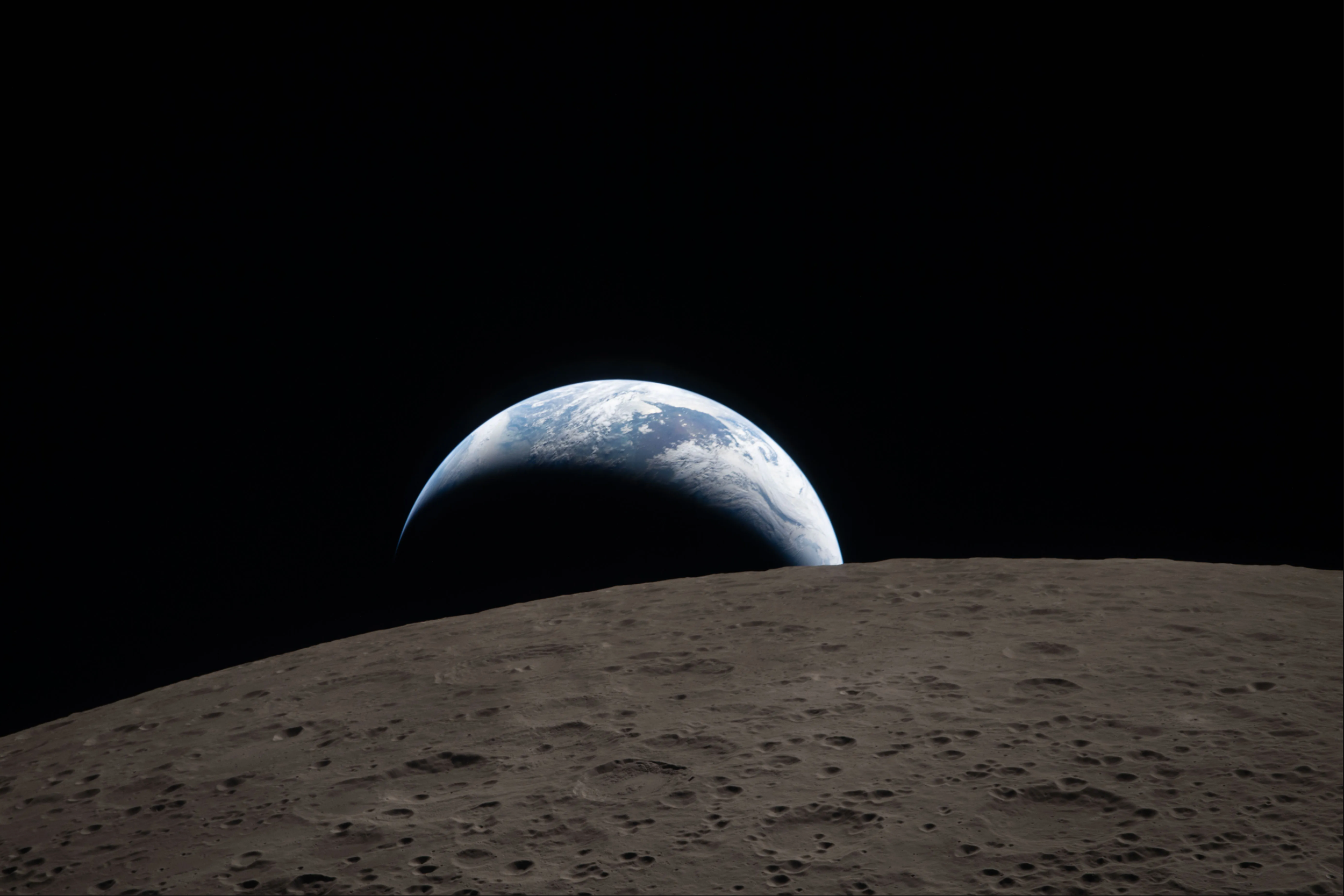
The Artemis II crew captured this view of Earth setting on April 6, 2026, as they flew around the Moon. Image Credit: NASA
Season 5, Episode 17: The Surprising History of the First Earth Day (and What It Means for You Today)
A perfect listen for those feeling cynical about the current state of the environment but longing to rediscover hope:
Thomas and Panu unravel the powerful stories behind the birth of the first Earth Day—how a simple idea, driven by US citizens from diverse backgrounds, transcended partisanship and grew into a movement with billions of supporters worldwide. You’ll learn some of the mythological and cultural symbolism that makes Earth Day—and the recent Artemis II moon mission—resonate deeply across traditions and generations. You’ll also find practical ways to reclaim Earth Day, celebrating not just ecological awareness, but our own personal connection to nature and our collective future.
Links
Adam Rome (2010) The Genius of Earth DayEnvironmental History (Useful primer on the first Earth Day month in the US in 1970)
Arbor Day, celebrated worldwide, sometimes at Spring Equinox
Transcript
Transcript edited for clarity and brevity.
Thomas Doherty: Well hello, I'm Thomas Doherty.
Panu Pihkala: I am Panu Pihkala.
Doherty: And welcome to climate change and happiness. This is our podcast for people around the globe who are thinking and feeling deeply about the personal side of climate change, particularly their emotions, their emotional responses. And, you know, climate change is linked to all kinds of other things in the world, including our connections with nature and other people around us and how we either suffer with them or celebrate them. So at least myself, I'm enjoying some spring weather here in Portland, Oregon, longer days. We've had our Trillium, our Trillium Festival last week. So the wildflowers were coming out. Panu, how are you doing in Helsinki? And we have Earth Day coming up and we have beautiful moon images from the Artemis, a moon flyby mission. how are you doing? And do you all have any Earth Day or Artemis moon discussions going on in Finland?
Pihkala: Thanks for asking Thomas. In Helsinki there's nice sunshine but it's relatively cold. So we had first spring flowers coming out in March but just a couple of them and we don't have many of them yet so we're still waiting for that lovely phase of spring when the flowers start to come out. we've of course been following the Artemis moon flights.
Already as a boy I was fascinated by lunar landings and all the Apollo stuff. So that's been a long time interest of mine and now my own boys, especially the older one who is now 12, roughly five years ago he was very keen about that also and was more up to date with current space exploration than I was. So certainly runs in the family and this topic also reminds me of
Doherty: Mm-hmm.
Pihkala: My earlier research with the history of environmentalism and because of that I know how impactful the first lunar flights were for environmentalism, the famous photos of seeing Earth from space the first time and also how significant things happened at the early 1970s but Earth Day actually is not big in Finland. We have some other annual team days which are much more famous around environmental themes and some environmental NGOs have tried to promote Earth Day here but I've realized that it's much bigger in the states. What's your history with Earth Day Thomas yourself?
Doherty: Yeah, I think this is a great conversation for us. you know, luckily this episode will come, will come out around April 22nd, which is traditionally the Earth Day holiday. And, well, I can identify with the fascination with space program as a child growing up in the US in the 1970s. was exactly like your boys really fascinated with, images of astronauts and when I was a child, they had the moon man, human moon voyage where they had the moon buggy, the car that they drove on the moon. And of course, I was fascinated with that and drawing pictures of it in my school notebooks. So I think parents will either, you know, people of a certain age and also parents will recognize these iconic pictures of that children draw of the astronaut with the umbilical cord coming out from the space from the floating around in space. It's very kind of primal, almost archetypal image.
And so I really, like a lot of people, I'm busy and I'm jaded and cynical. And so when I, with the Artemis moon program, you know, I kind of dismissed some of it at first, but then I did really look into it, and I was quite touched by the crew on the Artemis and their much more modern progressive makeup. And been doing some research on Earth Day. So, it's a really fascinating and genuinely inspiring. Like we need, we need inspiring things. I think we should talk more about Earth Day and the history because I can share some interesting stories today and then also this the Artemis, you know, I'll turn it over to you because I think you have ideas about mythology as well here. But, know, Artemis, the early Apollo missions, you know, the Apollo missions were named after gods. was Gemini, Mercury, Apollo, and it were masculine kind of tough guy, right stuff kind of test pilot moon missions that were quite dangerous, really.
But you know, this new era we've had the space station. We have more diverse space crews the Artemis to crew, you know, as a pilot of color and a married woman scientist. You know, they, they hug each other. They cry over the over the crew leaders loss of his wife to cancer. And, you know, they have that that really genuine overview effect where they look at look at the earth and they send really heartfelt messages just like you or I would that hey, I can see that we're all together on this planet we need. We need to work together. So it's really quite beautiful. You know, it's quite human. And it reminds us that people really do care about the planet and really do care about each other.
You know, Artemis is the sister of Apollo, right? And she is the goddess of as a very independent woman. So it's a great image for today. It's an independent woman Artemis, who likes to spend her time in the woods and protect animals, right? Yeah, so what is that? What does all this conjure for you?
Pihkala: Yeah, thanks for dwelling on that. In my adult years, I've had a slightly ambivalent relationship to space programs because part of that can be technological fascination and linked to utopian dreams of if we fail at sustainability and ecological protection, then at least some part of humanity could move elsewhere in the cosmos and that's not the way to go really. But there's some genuine advancements achieved through space technology that has to be admitted and some very primal sense of awe and wonder related to space travel. So that speaks to the ambiguity also.
Doherty: Yeah.
Pihkala: And this overview effects which you mentioned is a team in environmental psychology research. For example, Annais Voskhi, from Stanford, has been doing interesting studies on the environmental views of astronauts. For example, we might put a link to that in the show notes. But everything which motivates people to care for this fragile
Doherty: Yeah.
Pihkala: in black space is very important. This topic of annual theme days also in my mind evokes ancient stuff, mythologies and rituals and practices and they are of course heavily linked to the solar cycle and to the moon cycle also, the solstice, the equinoxes and
Doherty: Mm-hmm.
Pihkala: That's something that I increasingly follow in my life and I know Thomas that you do too. We've sometimes discussed this over the podcast and in many religions and meaning systems. There's various kinds of thematic days over the year and some of those have been adapted to environmental themes and actually quite early on, for example, the Arbor Day.
Doherty: Mm-hmm.
Pihkala: tree planting day already in the 19th century. I checked Wikipedia entry and found out that in some countries it's even older. The Spanish village of Mondoñedo held the first documented arbor plantation festival in 1594, says Wikipedia. that's old and of course environmental concerns were different.
Doherty: Mm-hmm. Wow.
Pihkala: For centuries we've had people who are not happy about cutting down trees for many reasons. I think we must admit that on one hand environmentalism is a relatively recent phenomenon, but on the other hand some of its substance goes way back. also, for example, to the ways that indigenous people have reacted to more industrial and often colonizing influences.
Doherty: Yeah, exactly. Yeah, so like a lot of these things, there's many, many layers. And when we stop our incessant movement and just start to consider this thing a lot of unfolds. And I think that's what helped. That's what was positive for me. I had already been I had because of my recent book and because of my work with people and the sometimes the really grim tasks we have with climate work and protecting the environment in this really violent kind of corrupt time that we're living in. I really want to test and see if Earth Day can be something that we can really embrace as something positive. And I really do believe that we can. And yes, Earth Day is not new. And one of the things about Earth Day that I like is that it allows us to really partake of all of these traditions that are quite genuine and they're international and indigenous and ancient the idea of all these seasonal holidays Easter Arbor Day, you know, the equinoxes. They're very, they're very, they're very human. And, yeah, so it's interesting,
I don't think it's, it's hard for people in the modern world to imagine just how striking it was for people to see a picture of Earth from space, from the Apollo missions, because people, it truly is a novel experience in human evolution. had never seen, we'd maybe seen some artistic rendering, but no one had ever seen a literal color photo of the planet existing, and people always use some term like in the blackness of space or something like that. So this is really, it's a really aesthetic, beautiful thing when the sun is shining on the planet.
And it does it does really, it is like a mirror, you know, like it reflects that, hey, we're on a closed sphere. And thus, we all national boundaries and all the things that we think about, they don't appear. So it is a very natural cognitive, psychological insight, that overview effect.
And, you know, people really environmentalists really use that to share that. And that was a part of the energy of the first Earth Day in the 1970s in the US. And I did some research, you know, there's a lot of instructive things with the first Earth Day. So part of it was started by, you know, a senator, a senator from Wisconsin and governor who actually was inspired by the Vietnam War, organization and mobilization and teach ins and wanted to have a teach in about the environment. Gaylord Nelson of Wisconsin. So he got together with a group of young people, the oldest of the oldest in the planning group was age 28. And they came out of the civil rights movement and Chicano activists, a woman who worked for the for the for the Robert Kennedy political campaign. So it was actually quite diverse. And they and they put this out this this teach in and it took on a life of its own. And it is still the largest, the largest public event and protest in US history. was three times bigger than the recent No Kings march that we had in the US.
And there was like 35,000 speakers all around the country. And mostly grassroots organized by communities by families by moms by teachers. So really, it was really a big deal. A really, really a big deal. And it was bipartisan. The there was also a Republican from California, Pete McCloskey.
Pihkala: Hmm.
Doherty: that day, that Earth Day month, there was all kinds of things going all around the country. There was TV shows. The news covered it. Magazines. The U.S. Congress actually took a day off on Earth Day so that legislators could go to their districts and speak. Corporate leaders spoke. Doctors, architects, labor leaders, religious leaders.
So it was actually much more like we think of the current of modern environmental movement. People think about pollution. They were thinking about human rights, civil rights, environmental justice. It's quite, quite amazing, really. And this is a time when there was no internet, no Facebook, no cell phones. So this was really word of mouth. So to me, it just reminds us that as what we know, people care about the planet. People care about nature.
Most people in all countries, 80% of people in the world support climate action and support government action on this. So it is the majority of people. And if we let people really be free to talk about this, they will love doing it. Now, if we tried to this in the difference with today, is that it's all politicized and people actively have made it difficult for people to do this very human, basic thing. but that's negative bad actors that have made it difficult. is a very natural, very natural response to care about other animals and nature and to, and to, and to care about the planet. So it's just good for us to think about.
Pihkala: Mmm. Thanks for sharing all that history. I knew part of that but not all of that. It's very inspiring how large the people's movement was and all the enthusiasm. Naturally when something is done the first time or the couple of first times it's often easier to get people involved but it requires the background motivation which is in this case care for the earth that exists in so many people's hearts as you say Thomas. I totally agree that we too often forget that and something not as large but with some similarities happened at the end of 2010s when climate change awareness became more widespread. Of course we've had people who have been concerned and aware of climate change for decades. But there was something of that attitude that, OK, this is a major issue. Now let's together do something about it. that's in Finland, for example, it led to the largest climate demonstrations we've had. And then, of course, COVID-19 pandemic and other things caused much trouble for that. But the fundamental great power in people who care is of course still very much present.
Doherty: Mm hmm. Yeah. And so I think, you know, another interesting story about Earth Day. So the tea was a really kind of a like a “mod squad” kind of people that came together. So you had these representatives, these older white males. It's really it's really Panu. It's such an interesting time. both politicians, you know, from California, Wisconsin, governor and governor and representative, you know, they it was a time when environmental protection was bipartisan. It wasn't politicized. These guys were not necessarily radicals. They were actually many in many ways quite conservative. Both of them were combat veterans of World War Two, for example.
And, you know, they it was lucky, you know, they pulled together this group and they wanted to call it a teach in and it was kind of dry. And then then they got this mad Madison Avenue advertising guy, Julian Koenig, who's a famous advertising person who, you know, developed some of the iconic ads from Volkswagen cars in the US, you know, this idea of think small, you know, these really kind of funny, you know, we have that show, Mad Men about advertising in the in the 60s. Well, he was one of those Mad Men characters. But he gave them a bunch of ideas like E-Day or Ecology Day, but he said, call it Earth Day, which is a great is one of the best kind of brands in the 20th century. And it was actually Koenig's birthday, April 22nd was his birthday. And so, you know, Earth Day/birthday, that was part of his inspiration.
But, you know, I think what we can take from it is that Earth Day, the first Earth Day is commonly seen as the birth of at least the modern environmental movement in the United States. And its scope and scale, as we've talked about, is really important. But, you know, I think what we can take from it is that we can think of Earth Day as the birthday of our environmental consciousness, you
Some people have a like a real clear environmental wake up like some epiphany that changes their life. But for most of us, our environmental consciousness, our environmental identity, our values, it forms, you know, imperceptibly from our childhood, and it just becomes part of who we are, you know, and on this podcast, we get people to talk about those all that stuff. But you know, so there's no specific birthday of that, except, you know, our own literal coming into the planet as organic beings.
So I think that's where I'm that's what I'm suggesting people do with Earth Day. Parents, teachers think of Earth Day as an opportunity to celebrate the birthday of our environmental values. And I think that's a pretty useful way to start thinking about this holiday that goes forward. So it isn't necessarily tied just to the 1970s. And it's much more international like right now almost 200 countries, you know, celebrate some form of Earth Day. And it is crass and maybe commercialized a little bit. But I think there's a there's like with all these holidays, there's a really healthy, kind of genuine core, like even a spiritual, spiritual core. So that's my mission, this Earth Day, to reclaim, reclaim it and not be so cynical about it.
Pihkala: Yeah, reclaiming the Earth Day. And course, Mother Earth is a very ancient symbol and a pair of words. Some of the young environmental activists who have been interviewed for various studies actually speak very movingly about them.
Doherty: Yeah, yeah, exactly.
Pihkala: Ecological crisis and climate crisis damaging their mother, meaning the Earth. So that's one link here and closely related to mythologies and religion also. In Finland we celebrate Mother's Day, the second weekend in May, not too far from Earth Day. And here the start of the warmer days of summer, which usually took place in early June, which is the end of the school year in Nordic countries. So that's a big celebration of the beauty of nature. And when I was working more with religious communities, I was advocating for the idea of having different kinds of thematic days over the year. So there's this traditional celebrating nature's beauty and gratitude and those kinds of things. And then there's a need also for encountering the difficult emotions and that's more new content.
Well, the Remembrance Day for a species 30th of November is one international marker day for that, but there's many other options also. And some of these thematic days come from environmental organizations, the Earth Hour in March is celebrated by many in Finland. And then there's Overshoot Day and there's good psychological discussion of those theme days which tend to be ambivalent on one hand. They remind people of the crisis and problems, but they can also become sort of gloomy reminders and temporary evocations of guilt and shame and then people move on because it sounds so depressing. So it's difficult with the difficulty of emotions and I'm not totally happy at all with the ways that Overshoot Day is dealt with in Finland, for example. I don't see much change happening around that, but anyway, the fundamental idea of having different thematics there is for encountering various aspects of the relationship between humans and the modern human world. That's very important, I think.
Doherty: Yeah. And that's one thing, you know, you learn when you do any kind of environmental or climate work. There's a bunch of different ideas about it. You cannot, you can't get everyone to agree. And so these are primal impulses to recognize. So, you know, the earth hour, overshoot day, these each, these come from some person or group that said, how, can we do? How can we celebrate this kind of thing? And so, yes, there are a myriad opportunities and then they kind of fight for attention in our in our modern kind of you know attention economy.
And I just for listeners who are cynical about Earth Day and don't necessarily buy this. I totally get it. That's many ways how I've thought about Earth Day. By the time I came of age in the, you know, the late eighties and early nineties, Earth Day was a memory. And, you know, we had it was it was not it was seen as almost a cliche. And it's easy to feel cynical. And in fact, all of the great environmental, legal, logistical victories of the first Earth Day era, like the Clean Air Act, the Clean Water Act, all of these things are being, you know, really sabotaged right now by the fossil fuel industry that's running, running much of the US government because they bought influence in, in Washington.
So yes, all of these victories need to be protected. So yes, there's no there's no easy answer. And there's a lot of dark forces in the world. But that should not, you know, blot out the beauty of the planet and the genuine, healthy emotions that the Artemis crew is feeling looking at the Earth that your sons, you know, feel about, you know, the idea of space, space travel, these are all genuine, beautiful things. And the way to move on this is to think about it and to be conscious about it. And again, it comes back to the things we talk about all the time, which is on this podcast, which is, know, 360 emotions, we need to feel all the different, all the different emotions and, and not, not somehow disallow ourselves from feeling the positive awe, you know, that that these things bring which are, you know, really natural, healthy human emotions.
So yeah, so listeners, you can think about the birthday of your environmental identity and values as being on Earth Day. And we have many episodes talking about this idea of environmental identity and your whole your whole life story and all the different connections you have with nature. That's I think the way to celebrate Earth Day is to is to talk about our life stories and our nature connections and do an environmental timeline and think about all the key experiences that we've had. Kind of recharge our batteries. It's springy and naturally at least in the northern hemisphere it is a time to focus on so that some of this new growth.
Pihkala: Hmm. Yeah, if you invite just a couple of people who you trust and go out and gather around this, I will be very surprised if you don't come out of that feeling more energy than you did before. There's something really powerful in sharing between people. And one option, of course, is always to do some kind of even spontaneous ritual or co-created ritual which doesn't have to be grandiose, it can be just doing some symbolic activity with the elements of nature that are close by, whether those are branches and stones or something more. And that already then brings you or us closer to the very ancient practice of using ritual to keep us conscious during the annual cycle.
Doherty: Yeah, yeah. Yeah, exactly. And you know, thinking of Artemis that that that image of Artemis is interesting, you know, this goddess, god of the moon, capable woman protector, fierce. You know, one of the stories of Artemis, which I, don't think I'd ever heard that story. So she's this, you might know this story. She saw Artemis, the myths says that Artemis is the twin sister of Apollo, they were born together from Leto. But apparently Artemis was born first. And then she that assisted in the birth of her brother and helped her mother through labor. So Artemis is a hardworking, hardworking woman who of course, immediately goes into helping helps her brother, her mother, her brother be birthed. So she's also the patron of childbirth, of midwives, among other things. just, you know, and the I was reading about the person at NASA who came up with this name Artemis, they needed a name, because it had it didn't have that the program didn't have a compelling name when they were trying to sell this program to the US government and to Congress. And so, you know, they plucked Artemis out, it was actually a name that had been used a little bit already.
But one of the goals for this particular program was that it was going to have women in it And so they picked Artemis as a god goddess, but I don't think they really even realized the depth of the symbology at the time So it's really interesting, you know, so the world is a little more mysterious. You know then then we think I think sometimes and there's all kinds of larger, you know stories and trends going on. Anyway, fascinating stuff.
Pihkala: Yeah, it truly is. When I was more involved with Christian ecological theology, it was interesting to observe that when I was baptized as a baby, the date was April 22nd. Much later on when I was ordained, the date was 5th of June, which is the Global World Environmental Day. So some nice symbolism also related to this comment about the world being a mysterious place. Glad to be talking with you, Thomas, the listeners. I hope you find good ways to celebrate it.
Doherty: Same here. Yeah, thank you, Panu and listeners. Thank you. Again, allow yourself to be a little bit cynical because there's a lot to be cynical about. We all know but also remind remember that there are beautiful things happening in the universe, in the cosmos, and among all of our fellow people. I mean 86% of people in the globe, you know, endorse climate action, environmental protections, and want their governments to work together. So let's keep that in mind. All right, Panu and listeners, everyone be well.
Pihkala: Take care.