Season 5, Episode 7: On Hiking and Zen with Brother Phap Luu
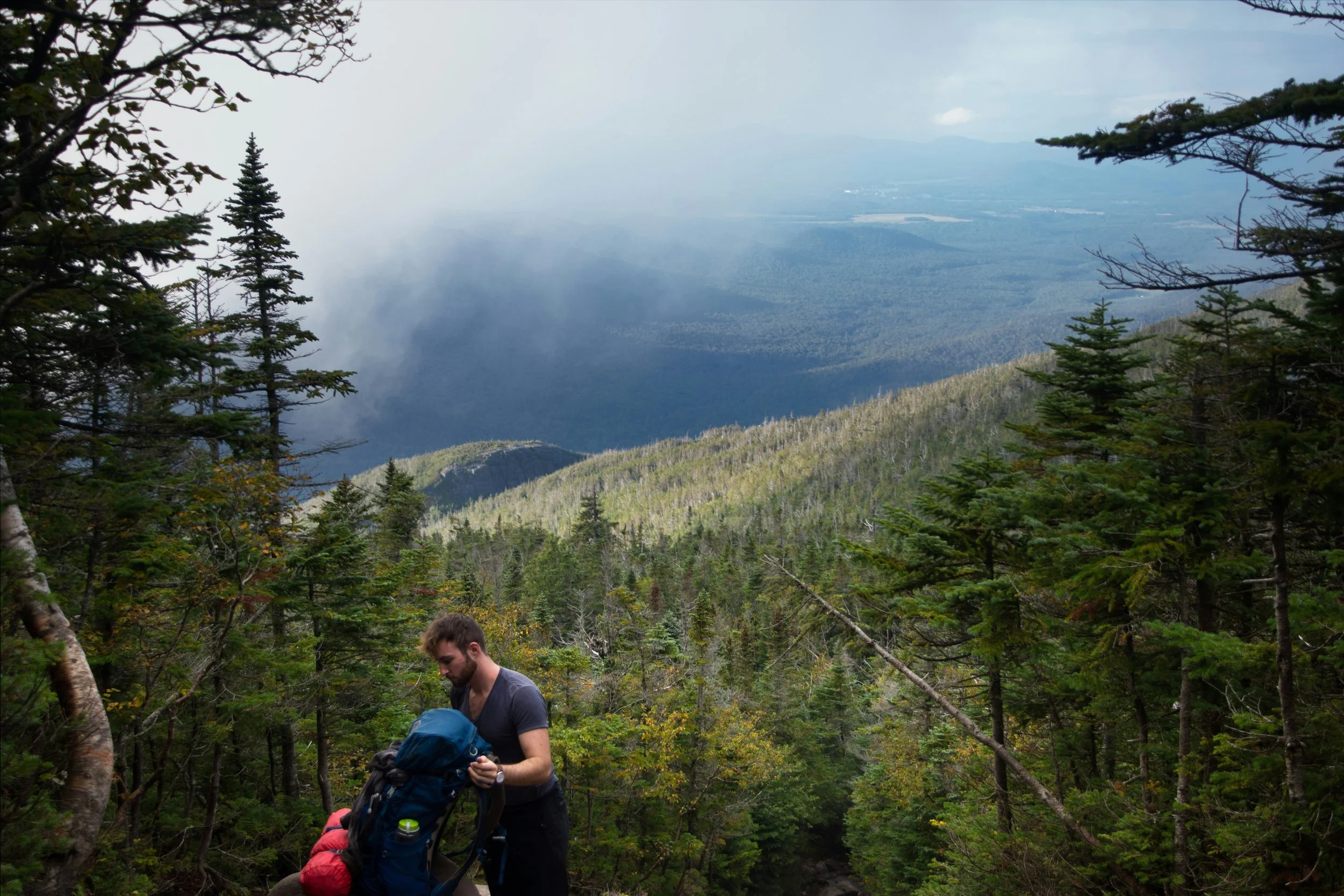
image credit | Alex Moliski
Season 5, Episode 7: On Hiking and Zen with Brother Phap Luu
Thomas and Panu had a great discussion with Brother Phap Luu, a US born Buddhist monk in the Plum Village tradition, and co-author of Hiking Zen. Topics included the dynamics of hiking meditation, the role of mindfulness and Buddhist thought in an engaged and ethical life, ways to find peace amid the furor of politics and climate threats.
Links
Dartmouth Alumni Magazine: A Monk’s Journey
A Simple Life: A Response to the Climate Crisis by Brother Phap Luu
Johannes Cairns (2025) Engaged Buddhist responses to the climate crisis: Negotiations among Western Buddhist climate activists.
Transcript
Transcript edited for clarity and brevity.
[music: “CC&H theme music”]
Introduction voice: Welcome to Climate Change and Happiness (CC&H), an international podcast that explores the personal side of climate change. Your feelings, what the crisis means to you, and how to cope and thrive. And now, your hosts, Thomas Doherty and Panu Pihkala.
Thomas Doherty: Well, hello, I'm Thomas Doherty.
Panu: And I am Panu Pihkala.
Doherty: And welcome to climate change and happiness. is our podcast, our show for people around the globe who are thinking and feeling deeply about climate change and other environmental issues and other world issues. And we were always asking this provocative question, you know, what is where does happiness fit in and what does it mean to be happy in the modern world? And we approach this from different directions. I find that often for people at the end of the day, a spiritual, the spiritual dimension of this work is important. So that's one angle and we're going to get into that a little bit in terms of spirituality, but also just being in nature and actually experiencing directly, you know, connection and communion with the natural world. in order to explore this, we have a very special guest.
Brother Phap Luu: HI, I'm Brother Phap Luu, or Brother Stream, a monk in the Plum Village tradition, and I live at Deer Park Monastery in Southern California. And I recently co-wrote a book called Hiking Zen, Train Your Mind in Nature with one of my brothers, Brother Phap Xa. And so it's little fun stories about practicing mindfulness and meditation in nature over our backpacking retreat, specifically on the Appalachian Trail, a long seven week trip we did back in 2018.
Doherty: Yeah, I'm so glad you could join us. yeah, the part of the backstory is that a dear friend gave me a copy of Hiking Zan, Phap Luu's book this summer for my birthday in June. you know, I'm not a formal Buddhist practitioner myself, although I have been exposed to Buddhist practice and meditations and retreats and the teachings of Thich Nhat Hanh and that's like many people that's just part of my way of understanding the world. so the book was a really great reminder to me of all of that. And I was particularly intrigued by the stories about hiking on the Appalachian Trail and just the real candid stories of what it's like to be hiking and the positive sides of being in nature, but also the challenges of pacing yourself and being with a group and managing different styles and what happens when you spill hot broth on your lap, you know, on a cold rainy day around the campfire and all the real, you know, personality conflicts that can happen when you have a small group. So it was a really lovely way to think about connections with nature and how our mind works and the Buddhist Dharma. So anyway,
Brother Phap Luu: Yeah, right.
Doherty: And listeners, know, the way this works is sometimes you just have to reach out. And I actually just reached out to the, think maybe to the publisher or something to try to get a, can I get a hold of these two, one of these monks and talk to them, tell them about my book. And so here we are, we were able to connect and Phap Luu was gracious enough to join us on the podcast. Panu and Phap Luu have met now and everybody has a lot to talk about. So it's a great, it's just a great example of an international connection. So Panu, you wanna get us started in our conversation?
Panu: Warm welcome, brother Phap Luu, also on my behalf. Really a pleasure to meet you. Hiking has been an important part in my life also and spiritual walks, the dimension of spirituality in walking and hiking. there's a bunch of connections with my own life history also.
Brother Phap Luu: obviously.
Panu: Dear listeners, walking is one of those subjects which very easily become linked with the art of everyday living. sort of art of mindful walking has lots of similarities with things which are very much needed in our everyday lives also amidst the climate crisis. But before going into specifics, it would be lovely to hear something of your background. Now, of course, there's the whole story about how an American becomes a Buddhist monk and you have a video on YouTube about climate matters also and then there's all the contents related to hiking. But would you like to start by telling something about your journey towards this place and time where you are now?
Brother Phap Luu: Sure, can give a short version. I would say the shortest version is that suffering, that's why I became a monk. How do you deal with the ill being or this suffering, anxiety, fear that we experience as human beings, right? Where nobody's in control of our future and we don't seem to be very much in control of our present moment. And yet here we are experiencing this present moment. And so I, as a young person, I was exposed a lot to nature. I think that, and that together with the fact that I was not raised in a formal religious tradition, my parents who raised Catholic, they decided not to raise us Catholic. So I was not baptized. And yeah, my father had the vision that, actually, both my parents, but really my father had the vision that my sister and I could choose whatever spiritual path, I don't think he said spiritual path, he said religion, that we want to, he wanted it to be open, because that's something that he regretted very much in his own life, that he could not choose. But even that idea of choosing a religious tradition is very modern.
I don't think he necessarily blames on his parents for that. And then my father grew up hunting with my grandfather and he never liked killing animals, but he loved being in nature. so that he transmitted to me. So from a very young age, I spent lots of time with my father in the forest and I just, you know, with my whole family really, but I guess my father saw that I enjoyed it very much. So I started going more and more. I was involved in Boy Scouts in my town. And so we spent a lot of time in nature. And then I just grew up in a very, a very wild place. I mean, I wouldn't say wild, it's domesticated Connecticut, but it's, know, it's the forest have grown back and I was in a wooded place, rather isolated on the river. There was a tonic river and so I just spent a lot of time out walking in the forest, building fires as a kid and, you know, things that I that I guess I take for granted, but not everyone has necessarily nowadays. More and more of us are in urban areas growing up. And so I just had that freedom to always walk out the door and I just was fascinated with the forest and the trees and I would just throughout various epics of my life.
Later I got into running and so I was a cross country runner and track runner. And so then I would run in the state forest or town forest near where I grew up and with my dog. And so that was just a very healing experience. Also, I grew up, you know, the other thing is I was in a ski family. So we spent a lot of time in the summer. My grandfather ran a boat shop, so we had a, we were water skiers. So he goes skiing most every day in the summer. And then in the winter we were snow skiers. we'd go up to mountains in Northern Connecticut or up in New Hampshire, Vermont and beyond the snow. And so those experiences of being, know, for the first time on my own on an isolated part of the mountain with the snow. These experiences all kind of came together into dividing a kind of spiritual path for me. And it was really when I discovered Buddhism that I found a spiritual path, a tradition, which already seemed to integrate everything that I had experienced in these wild forays into nature.
Panu: Thanks a lot for sharing all that and a lot of similarities with many people who have become environmentalists of various kinds. Being already in the woods as a child and many kinds of experiences there. From personal history there's a connection also with running in the woods, I've done orientering since I was seven, know, the sports where you have a map and compass and you run through the woods. So I've always loved that. And in your book, as has been mentioned here, there's experiences from the Appalachian Trail, which sounds fabulous. I've only been there for like one one day stretch. But in our pre-conversation, I heard that you have some hiking possibilities right next to the monastery where you are living. So just setting up the context, would you like to say a bit about the place where you are living and serving, perhaps especially in relation to the modern human world?
Brother Phap Luu: Sure, sure. So I became a monk in the Plum Village tradition. I met the Master Thich Nhat Hanh on a US tour. came on in 2002, and for the first time, and then listened to his public talk and was just, I felt this is my teacher. And I also had experience with his early communities here. we call it the plum village tradition. So the first monasteries in France, he was exiled and took political asylum in France when he spoke out against the war in Vietnam in 1966. And so he built a community there eventually in the South of France. And so when I got to ask him directly to become a monk in 2003, he said, I would need to come there to ordain and it's a decision of the community. And so I was paying off my school loans and I just sent the last check in and got on a plane when I was 27 and went over to France to ordain. And it was a very fortunate time in his life trajectory because he, first of all, he opened this monastery, Deer Park in 2000 and decided to close Plum Village for three months and bring the entire community here. So that's when I first came here to Deer Park, where I live in Southern California. And yeah, I think we managed through good conditions to find this center, this valley, Chaparral Wild in the Escondido, California, where right next to a big town, wild town park, so it's many thousands of acres altogether where we have this monastery. For me, if you go to see pictures of the old early monasteries in China in the mountains, it's kind of situated like that. So I do feel it be a great center of the Buddha dharma for hundreds of years going into the future here in America. So we have that kind of vision.
And that's something that drew me to Thai as well, is that he had the vision for long term and his approach to Mother Earth and the climate crisis also had that. He recognized that we might not as human beings make it through this moment we're having on our planet. But the Mother Earth has the capacity to regenerate itself. Just like when the tiny mammals that survived the end of Cretaceous extinction, then filled in the niche that the dinosaurs left behind. so I think that the Dhamma accounts for all those things. we are, anyhow, just to come back to Deer Park, we are really looking in this long-term way and the way in which we're living in the monastery.
And so I think it's very helpful to have these guiding visions of impermanence, of non-self, of Nirvana, these kind of three, we call it dhamma seals, are the mark of true dhamma teaching. We need to look at our bodies and look at all of the innovations and creations and institutions of our human existence as impermanent. yeah, in that way, we actually live much happier in the present moment and we can transmit that to future generations. And so that's kind of what we're doing here at Deer Park. And it's the spirit of our backpacking retreats. And like you say, Panu, we've been, the book talks about the backpacking retreats on the Appalachian Trail. We've developed ones that we do straight here from the monastery because we have these thousands of acres around us. So we've been able to do a number of retreats where we start right in the monastery and we backpack right out. And there's a campsite four miles away at a lake in the town park near us and we camp there for a few nights and hike and then we camp on top of our mountain right here for a couple nights and then come back. So it's a whole week long retreat and I found that actually some of those retreats are our most powerful ones because we have the energy of practice here in the monastery to kind of hold the beginning of the retreat and then we go out into the wild.
And I've always encouraged folks as well when they come on our normal retreats, which are more sedentary, you know, in the monastery. say, not everyone calls it, I call them our sedentary retreats. Because, know, meditation is not something we assume means you have to sit still. But actually meditation is happening in action and our teacher was an exemplar of that philosophy. And so we actually, you know, in our retreats that we do here that are mobile, you know, we say mobile monastery, know, walking meditation. We're able to benefit at the beginning from the collective energy here in the monastery and then be able to go out and do this healing that we talk about in the wild that I feel is critical if we want people to understand the preciousness of what we have on this planet Earth that we cannot, I would say maybe even possibly, but not even realistically recreate on another planet, let alone like, you know, how we could recover from the increasing temperatures of our climate. You know, and then when people do get that insight.
I mean, one thing is the work we do with climate activists who are already out there, professionals, And introducing them to mindfulness so they can take care of their emotions, especially strong emotions like despair and anger that they encounter daily as climate activists. another approach is to actually activate people through bringing them in this immersive experience in nature where they realize the preciousness of what it is we have and the interconnectedness of how we are with the natural world around us so that climate activism as it were is just a natural extension of their being.
Doherty: Lovely, lovely. Yeah, Panu, I have a number of thoughts, but Panu, what are you percolating on as you're listening? As you're listening here.
Panu: Lots of things and Thich Nhat Hanh has been a major influence for Buddhists who are active in environmental matters, but of course also for people with other worldviews and religions. So just wanting to say that out explicitly as a scholar of religion and ecology. So that's the influence has been profound. And in this podcast, we've talked about Joanna Macey and the Buddhist influencing methods for engaging with our pain for the world as Macey puts it or difficult emotions and existential questions arising out of the state of the world. And Brother Phap Luu named some of these and practicing mindfulness and other spiritual practices is one important way to engage with that. So there's lots of resonances with the larger topics around environmentalism and also also eco emotions but Thomas what are you sitting with now.
Doherty: Yeah, I'm sitting with all the fruitful directions we could go on our talk and what's best for the listeners as we hold this space. I think I want to, before we're done, cycle to this idea of eco-anxiety and coping, because I think it's a really important takeaway from this work. You know, but I think, you know, what we're talking about, we had a we had a talk with Trevye Johnson a little while back, and I and our podcast and she works and helps people to to deal with damage, damaged nature because one of the paradoxes that's coming up for people. I mean, I think most people, whether they're a nature person or even just a, you know, nature curious, as you might say, or Buddhist curious, they get the idea of how it'd be interesting to do some meditation and going to go on a mind walk but lately what happens of course is that people go into nature and they notice the weather or smoke or a wildfire or degradation and then it's really like a double whammy like they they're coming in with this innocent sense of so the opening up to inter being is beautiful but it's also when you're innocent it opens you up to all this potential pain and you know the Aldo Leopold idea of, you know, seeing all the all the wounds and pains of the world. And so they're not ready for that.
So and I think it's great, you know, there's so much here, but the idea of interbeing and that we're just part of a larger lineage of history and nature. Lately, I've been inspired by some learning I've done about different plant communities and how there's the climax communities that we like. But there's also the weedy communities that spring up and after a forest fire or after a thing. And then there's also the really hardy species like cacti and stuff like that. And so now when I go into nature and I see a so called damaged place. It's not damaged to me anymore. I just realized there's just a different life regime that's living in it. So anyway, I think listeners need to realize that yes, you should in fact go do all these experiences we're talking about, but you do have to take care of yourself because it can't open you up. It can't open you up to all of these potential woundings. then I think that leads us to this idea of compassion.
you know, how do we, how are we gentle with ourselves? Cause then we feel guilty or we're, feel we're implicit in destruction of nature. And so that's probably a really juicy thing that comes up for you. Brother Phap Luu in these, in these retreats, when people are sitting and they, someone gets up and like, how do you handle that? You know, when you're a tree, when someone comes up and says, well, I feel guilty and we're, we're destroying the planet. And you know, they're in that place of powerlessness. How do you hold that space?
Brother Phap Luu: Yeah, thank you. This is really important. I feel, first of all, we have to model the change we want to be in the world, right? So as monks and nuns in our tradition, we try to live simply. So we do use computers, know, and smartphones to the extent we need to, but we try to keep it very minimal.
And, you know, we eat together, so we share a common space. We buy food together or receive food as offering. And so that reduces already our way of living on the planet. so people can see, and I think why Deer Park is growing and more young people are coming here or becoming monastic or living nearby, working on our organic farm or our new school, is that they see that we're living the change and we're also happy, right? So, I mean, people need to see that you are a happy, person. I I still have my moments. I look within and I see how difficult are the challenges we're facing, but I learned from Thay to have a resilient joy and nourish that joy on a daily basis.
So, because I know that will allow me to respond and adapt flexibly to the challenge that's coming. If I'm caught in emotions like despair and anger, I only bash things or resign myself, right? So I found that joy and happiness are emotions that allow me to have a more skillful response to these challenges.
And that's really what we need. So first is modeling for people what a happy life is despite these challenges. And the second is as a spiritual teacher, which is a role I often find myself in, I'm cognizant that I need to curate an experience for people, that I'm part of what we're doing and the Buddha was doing and Thay was doing. It's just recognizing people.
You know, we're always self-regulating, right? And so there's a space in which, you know, some people, the space in which they can self-regulate is very small. And so you need to understand that. And then there are others who their capacity is large and others who have grown their capacity over the years through their practice of mindfulness. so, you know, being mindful, you can be aware of when somebody's gone beyond their limit and, you know, okay, adjust.
And so we do that on our retreats and on our backpacking retreats. We respond in an adaptive way. If somebody goes way beyond, then sometimes they have to come off the retreat. we always have ways like backup plan B and C. Usually we try to keep it and try to adjust the group and have more energy. I always try to have people who've been on backpacking retreats before, even though they're not formally like leaders or facilitators, but they're there as support as well because they are more able to take care of their difficult emotions in the middle of a rainstorm or, know, quite often it's just the inner storm somebody's experiencing because of some psychological trauma that's coming up for them being out in nature. And, you know, then taking people also a little bit farther in so they see that I'm a big proponent of mindful walking in so-called damage spaces. We recently did a walking meditation. I was doing a book signing right here in Escondido. And so we'd started it with a one-hour walking meditation. And so we went down and walked through the transit center in Escondido. And I mean, it's really a quite developed urban area of the town.
And we walked on the bike path that went by this, the Escondido Creek, which is a big concrete slabs. mean, there's no dirt to be seen. And then we were doing mindful movements in this opening in a gate. And then a man rode by on his bike and then he rode right past us and off the bike path and on this little dirt path along a channel. And so I, when we finished the movements, I thought, well, What the heck, let's try it. And so we walked there, we followed him and we found destroyed bits of tents and debris and, you know, all kind of, know, unhoused folk had been living basically behind this shopping center on a channel, you know, on the bank, a sloping bank of a channel. And we actually came on the man and his bike and then his partner was taking a shower and one of these camping showers that they'd managed to rig up right there.
And we did walking meditation right through. mean, we respectfully asked if we could pass and, and, you know, there are other folks back there. So it was a, you know, I think that kind of experience is important for people to have, to see that what, you know, what, what, we are hiding the, the effect, the effects of our manner of living on this planet. And in order to see it, we, I feel one of the best ways is to get on our own two feet, to get out of our car bubbles, to get out of, you know, already an e-bike is better. But if you really are two feet, you know, walking the planet and also going in places where it feels a bit edgy, you know, I, I, I'm, you know, I was cognizant. was with a group of people and we're doing this together as an experience because we need to see what's there, you know, what kind of conditions people are living in on this planet.
So that's an example. think, you know, so the first thing is modeling. The second is curating the experience for others, you know, knowing that, you know, this we need to have a, you know, I'm sure you know, as a psychotherapist that you need to know where people are at and what they can handle, you know, and what we are able to bring to them in that moment.
Doherty: Yeah. Mm-hmm.
Panu: Yes, thanks for sharing that. That's a profound example of daring to be with suffering. My colleague and doctoral student Johannes Kerns, who is a Finnish Buddhist, just finished his dissertation on so-called engaged Buddhism and climate action.
So engaged Buddhism meaning, Buddhist very active in social matters and often environmental matters. And one of his points was that religion can shape how people relate to suffering. So this goes back to some of your very first sentences, Brother Phap Luu, here. And in relation to monotheistic religions, I've sometimes participated in discussions about pilgrimage.
That's one way of spiritual walking and also a metaphor of life and coming from a very nature-oriented ecumenical protestant background, it's been easy to emphasize that the journey is more essential than the destination and in monotheistic framings of pilgrimage there's different variations, but I think that the idea of being present in our lives is very, very crucial instead of focusing the attention on some destination. So in my mind that comes very close to the zen hiking thing and also reminds me of many things I've heard Buddhists say so just wanted to say that out loud.
Brother Phap Luu: Yeah, and one of the themes that I hope gets transmitted through the book is this concentration on aimlessness, like learning to walk without a destination. Because if we can apply that in the moment and then we expand it out towards our whole life and start to see that a lot of the goals and so forth, the destinations that we have in life are actually there. Even if we don't explicitly have them, they are there deep in our consciousness. They've been set through our intention when we were younger. And so in order to respond reflexively, we need to let go of a lot of those, some assumed destinations or goals. I mean, if we're going to do it as a collective in all of humanity, and if we can't do it as individuals first.
Let go of our career goals and many, many things that we expect, that we need to be happy. And that's the great teaching I got from the Master Thich Nhat Hanh because he did not have much control over his own life, right? He was exiled and he had to adjust many times. And yet he remained firm in his principles and the practice of the Dharma. And so I've learned to do that as well. I mean, I've let go of all kinds of expectations that my family, my culture. But even as a monk, I can come up with all kinds of destinations that don't necessarily bring happiness to myself and others.
Doherty: Yeah, this is wonderful. As always, we could go on and we'll have to have you come back, I think, because I feel like there is some real fruitful practical directions to go. think listeners, you know, one of the biggest things with eco anxiety is really like we're talking about just letting yourself be present. There's such as omnipresent pressure to act.
Take action to change our lives to change society to fight society to fight capitalism to kind of think that we're an atlas that's going to like balance out all this structural stuff. And that is a healthy impulse. it's because it comes deeply from our values and our deepest, you know, ethical consciousness. But, you know, there's got to be a time where you just stop for a moment. I think that's the key lesson is stopping doesn't mean stopping permanently. It means being able to stop for a moment to let this down for a moment so we can just be present, because then we can decide which direction we want to go. So I think that's the paradox with eco-anxiety is you have to just accept the world as it is and accept yourself just exactly as it is with not any action at all. It's like the old meditation saying, don't just do something, sit there like that. And it's so counterintuitive because our whole nervous system is geared up.
Brother Phap Luu: Yeah, right. Exactly. Yeah.
Doherty: This massive, you know, societal fight or flight response. But, you know, so that's why I think any contemplative practice, any spirituality, any kindness, you know, it's obviously there's thousands of years of depth of history in the Buddhist tradition with this, but just letting yourself take five minutes to be off the grid, off the clock, like an athlete that takes a timeout in a game doesn't mean you're not going to go back in the game.
But so anyway, that's just something for listeners to think about. But we've got to wrap up our conversation for now. But Phap Luu, what's lingering in your mind that you want to leave us with here?
Brother Phap Luu: Well, I just want to take a moment if it's okay just to honor a teacher of mine who just passed away a few days ago, Larry Ashmore, who is my earth sciences teacher and first year of high school. he would take us every class. He'd take us on a canoe trip on the Connecticut River. So we go camping in nature for a number of days. And I realized that he really modeled for us as students what it meant to be a concern and a citizen of this natural world. And I realized on his passing a couple of days ago that a lot of what's in Hiking Zen was also what he transmitted. So I just want to take, if I could, just this moment to honor his, because it's so important in our tradition to honor our teachers and all those who have transmitted to us. We are not individuals, right? We are just in a flow, a flowing stream of community.
Doherty: Mm-hmm.
Brother Phap Luu: And just to also in that spirit to just add to what you said, Thomas, now, which is, think, so helpful for people who are suffering and alone with the climate crisis, how important it is to connect to community. Yeah, I think if you're feeling despair, right away, connect to somebody, you know, and try to do it in person. And because the energy you get from building community.
Doherty: Hmm.
Brother Phap Luu: is so powerful, right? And it's meeting those needs that we need, that we have as human beings, that we often forget when we're fighting to save the planet. So whatever kind of community you can build with your neighbors, with friends, please do it. We need that in order to sustain the work we're doing. So thank you for calling that out.
Doherty: Mm-hmm. Yeah, and like you say co-regulate and curate so I think it's not it's not just because communities can be actually negative too and sometimes you get a bunch of scared Stressed out people they can go in a negative doom spiral so I think it's that connect and also co-regulate and like you like you say like try to see when people when someone neither yourself or someone else is just beyond your comfort zone and so that that that co-regulation I would say is is part of it. We'll wrap up here in a moment and let Phap Luu close us out but I just want to say Hiking Zen the book that, Phap Luu and Phap Xa, you know, co-wrote Hiking Zen, and Train Your Mind in Nature, Parallax Press. It's just a nice, it's a nice little pocket sized book, even if you're a long time devotee of, you know, Buddhism or Thich Nhat Hanh. It's a great, like for me, it was a great refresher course in reminding me of these, of these things in my daily life. And so, and I'm, just validated because I just wrote this book, you know, surviving climate anxiety. And so there's a lot of validation when I meet someone like Phap Luu and realize, okay, my thoughts aren't that far off from other other people's thoughts. So that makes me feel good. So Yeah, Panu why don't you Leave us with some final thoughts and we'll close off this episode here.
Panu: Warm thanks, Brother Phap Luu. It's been a delight and hopefully we'll get a chance to continue the conversation sometime. As a Finn, I was very delighted to hear that the monastery even has a sauna. So it must be a very good place and it may have a sauna, I'm not completely sure.
Doherty: yeah.
Brother Phap Luu: Yeah, it's a little bit secret.
Doherty: Yeah, yeah.
Brother Phap Luu: No, no, it's just because it's still these lingering ideas that a sauna is something like luxurious. But I take the Finnish attitude that it's the doctor, right?
Panu: Yeah, it's a place for healing and social connection and can be made from wood in a very almost ascetic fashion of course you get all kinds these days and the listeners will put links to also talks by Brother Phap Luu and you can find us at climatechangeandhappiness.com warm thanks to everybody who supports us at Patreon and Please do take care amidst your lives wherever you are. thanks.
Doherty: Yeah, so Brother Phap Luu and Panu, listeners, everyone, be well.
[music: “CC&H theme music”]
The Climate Change and Happiness Podcast is a self-funded volunteer effort. Please support us so we can keep bringing you messages of coping and thriving. See the donate page at climatechangeandhappiness.com.