
Season 5, Episode 15: A Journey around the Planet (Without Flying) With Thor Pedersen
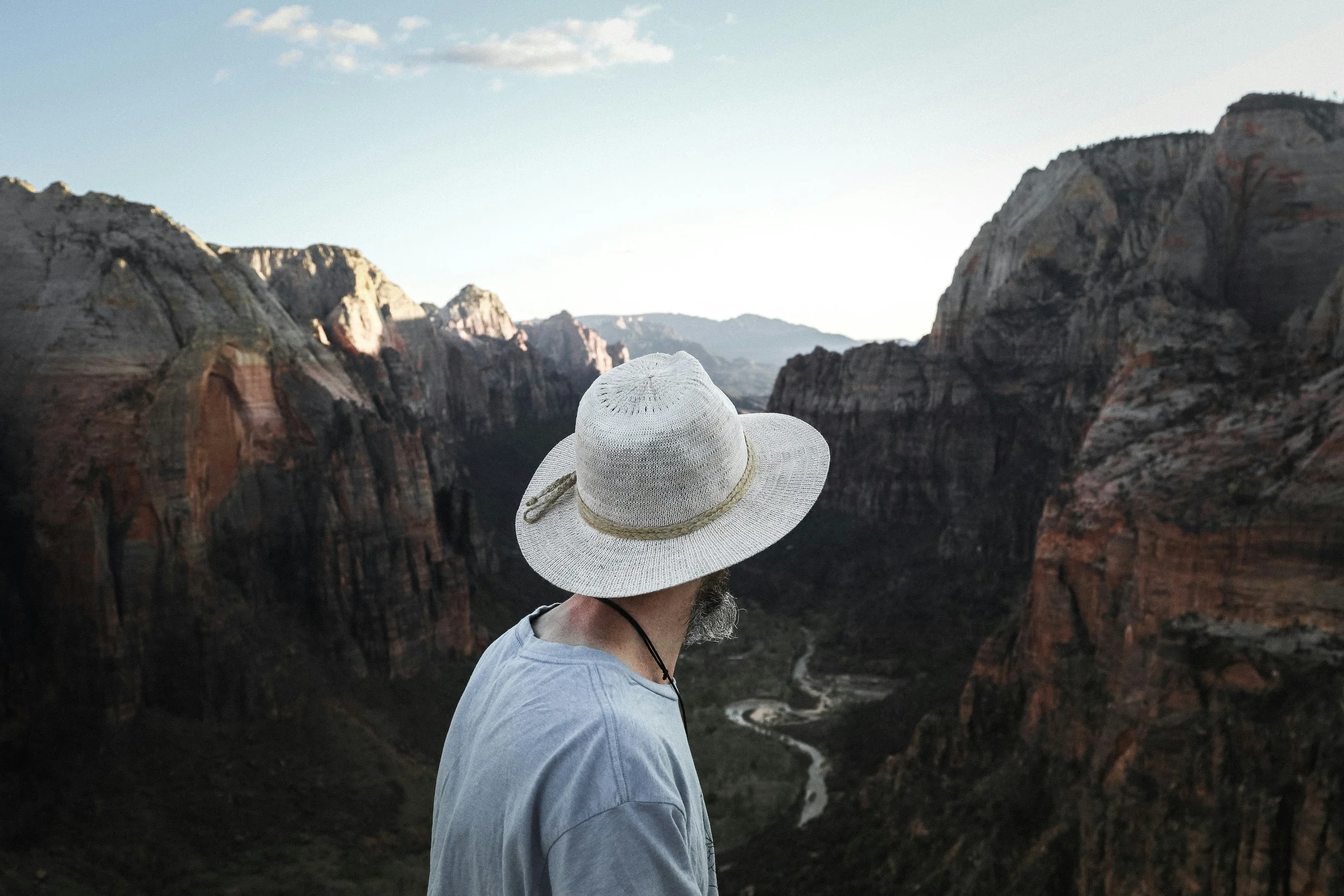
image credit | Jeremy Bishop
Season 5, Episode 15: A Journey around the Planet (Without Flying) With Thor Pedersen
Thor Pedersen embarked on a decade-long journey, traveling to every country without flying, redefining the limits of Earth-based travel. Join us to learn about the logistics and lessons of Thor’s global trek, revealing how resilience and cultural understanding transformed his mission into a powerful message about climate change and hope.
Links
Other topics discussed in the episode
Paul Salopek, walking around the world for National Geographic, the “Out of Eden walk.”
Transcript
Transcript edited for clarity and brevity.
Thomas Doherty: Well hello, I'm Thomas Doherty.
Panu Pihkala: I am Panu Pihkala.
Doherty: And this is our podcast, Climate Change and Happiness, the show for people around the globe who are thinking and feeling deeply about, well, climate change and happiness and our relationship with nature and making a space to talk about some of these global issues and how they manifest in our life and in our values. And Panu and I have been talking for a few years. He's in Helsinki and I'm in Portland, Oregon. And we've been thinking about travel in the world and all the things that we can learn by traveling and meeting different people and we are lucky to have a special guest today. It's going to help us in our conversation.
Thor Pedersen: Yeah, hi, I'm happy to be on board. My name is Thor Pedersen. I'm from Denmark and I'm best known for reaching every country in the world without flying.
Doherty: Yes, and that's exactly true. And I got a chance to meet Thor just recently at a literary festival and got a chance to meet him and see him speak and read his book. I, like many people, learned about his journey. And he is a very unique person. He's traveled all around the world, to every country in the world, without using a plane, which required, I think, I believe, 10 years.
Many, many interesting adventures and logistical challenges to make this happen. And I'm just fascinated by the whole story. I think people who are open to experience and travel are always fascinated by stories like this. It is truly a modern day journey. I thought it would really be great to bring Thor on our podcast and share this with you, the listener, just to take this conversation in a unique direction with someone who's recently had this global experience and see what insights we can have. I know I've got questions and things I'm curious about, but Panu, do you want to get us started?
Panu Pihkala: Warmly welcome Thor also on my behalf and lovely to have Nordic connections online in this podcast also. Travel is something that a lot of people really enjoy. Of course there's in equality globally about who gets to travel and so on, but there's also very different means of travel. In our climate crisis shaped world, many people are having thoughts and feelings about travel, lots of desires to see other countries and meet people, and there's a of good happening out of that, and then people are wondering about the carbon footprint and sometimes about security issues and so on.
In this podcast we've been touching on these themes earlier, but it's been a long time since we did any focused conversation on travel and that's going to be fascinating. What would you like to share from your journey towards the time and place where you are now? How did you become a human person who has done all this and now is trying to balance between various areas of life as many are doing?
Pedersen: Thank you for the welcome and that is an interesting question. So that comprises a connection between who I was in 2013 and who I might have been when I returned in 23 and who I am today. Back in 2013, I was very ambitious and my project was mostly centered around myself, my ambition and doing something which had never been done before. And then from early on, mean, like the first weeks or the first very few months of traveling, it took a turn and it became more about humanitarian work carried out by the Red Cross. I was traveling as a Goodwill Ambassador of the Danish Red Cross and meeting with the Red Cross.
Doherty: Mm-hmm.
Pedersen: In every country I was going through. And also the meetings that I had with people in every country I went through. And the culture, the food, the history, the scenery, the infrastructure, mean everything that I moved through. I was looking for something positive to share from every country in the world. And that came from my eyes being opened up very early in the project where I was surprised about the level of development or the local beauty. And again, I mean, some of these cities, the architecture and the way people were dressing. And, you know, these were countries that I felt maybe less about. So I was going through some countries where, you know, to the best of my knowledge, they were lagging behind five, 10, 15 years behind in development and then arriving and seeing that's absolutely not the case.
Doherty: Mm-hmm.
Pedersen: In some cases they were way ahead and also that there are other ways to measure these things. So, you know, I had been to more than 50 countries at the age of 34. was 34 when I left Denmark and I thought I knew quite a lot about the world. then because I was surprised about these countries and how much positive there was to share about them, I came to the conclusion that maybe a lot of other people also didn't know these things. And then I reasoned that media, mainstream media at least, is often quite negative. By default it focuses on the worst of the worst in our world. And everything I was seeing, not everything, but most of what I was seeing was contradicting the news stream. So I felt that I had a role to play as a voice, as someone who would be sharing the positive in every country and promoting every country around the world as if it was the best country in the world. So that was sort of the evolution of my project and then as it grew and got longer and longer and more and more demanding, I also took upon myself a role as an inspiration and motivation to people who want to achieve things in life.
Doherty: Yeah. Mm-hmm.
Pedersen: and when asked, talked to people and said, you know, look at what I have accomplished. And I've basically been out here on my own. So you have a team and if you can work together with this team, then just imagine the synergy and how much you guys would be able to accomplish. And I think there's a strong message in that. I also think that there's a strong message in that if you believe in something, if you have a goal and you truly believe in it and it's something you really want, then what are the main obstacles between reaching that goal and failing is your willpower. You will have bad days, it will be difficult. Not everything's going to be rosy red and fun and perfect. And you have to push through those hard patches. And when a door is locked, then you look for another door. And when someone says no, then you smile and say thank you. And you look for someone else to help you. But you find a way forward.
Doherty: Mm-hmm. Mm-hmm.
Pedersen: Yeah, so in 2013 nobody knew who I was and nobody would do an interview with me and I didn't have much to tell or say I came back in 2023 and yeah, I had a big online following and wrote a book and we finished a documentary film and interviews and attention and speaking engagements. So my life has been turned upside down. Yeah, I mean, we can, I can keep talking about this, but yeah.
Doherty: Yeah. No, this is great. Yeah, yeah. I like your book and I highly recommend Thor's book because it's also very personal and you talk about your background and your childhood. And you know, like many people, you were lucky enough to have connections with nature and canoeing and being. Early on, I think you found solace and support in the natural world, even alone as a child or when you needed your own space. And so I think you were comfortable on the land. And then, of course, the whole kind of Viking Nordic Scandinavian history of travel, I think that filled your sales, some of those either stereotypes or truth. But yeah, seems to me that, well, we can go in a lot of directions with our podcast
Pedersen: Yeah.
Doherty: It seems like you started off as an engineer, like working on logistics, because it was a big logistical problem. And then you came back more, I don't know, as a humanitarian or as a philosopher or something like that. So there was a huge, huge, huge personality change, I think, you know, or a growing or maturing into yourself. So jump in.
Pedersen: So my travel hero is Ibn Battuta, who was born out of Morocco some many, many hundred years ago. And there is a quote from him, which is that “travel makes you speechless and then turns you into a storyteller”.
Doherty: I love it. Yeah. Yeah.
Pihkala: That's great.
Pedersen: Yeah.
Doherty: Yeah, what are you thinking about Panu in terms of, you you're you talk to people all around the world and you're in, you know, plumbing the depths of different emotions and experiences. What's coming up in your mind?
Pihkala: Yeah, very fascinating to hear your story Thor. Thanks for sharing some elements of that and there would be a lot of stories to tell. I instantly hear that and thinking of our audience of people who are interested about various aspects of how to try to live well amidst contemporary times and you have already touched on quite important teams like willpower and courage but also the ability to ask for help when that's needed. So it seems that it wasn't just an individual hero's journey that you did but there was quite a lot of things going on between you and other people.
Pedersen: Absolutely. I mean, this is something I often stress that not just me, but anyone as far as I'm concerned who reaches every country in the world, if they think they did that on their own, then they're delusional. For me, I know that this was a collaboration with people across every continent and pretty much every country. was an enormous amount of support, sometimes really small support but meaningful and sometimes in the biggest ways imaginable but you know it's not a single person's achievement, this is a multiplayer game.
Pihkala: If you take a look back at these long journeys, is there some experience and memory of somebody really helping you out perhaps in a way that you didn't expect which comes to your mind?
Pedersen: There is, it's a bit of a story. I'll try to compress it as much as possible, but in West Africa, I had been in West Africa for quite some time and I felt that, okay, now I was starting to understand the culture and how things were and handshakes and this and that. And one of the things I clearly understood was that when you get inside a vehicle, then everybody in that vehicle is a team and that whatever that vehicle faces we face it together. So if you're in a bus, a mini bus in a Bush taxi, then you're a team. This was one thing and you do not desert your team. You know, this is one thing.
The other thing that I thought I understood was that quite often when someone pulls on a uniform, then they become unbelievably corrupted and and they might misuse their power. So the story goes that I've been through hundreds and hundreds of checkpoints on small dirt roads in rural areas and whatnot. And I'm in a Toyota Corolla and there three women in the back and I'm next to the driver up in front and we come to a checkpoint.
There is a very corrupted guy there who's blocking my passage and all my paperwork is in order, everything checks out. But it doesn't matter. The game is that they will keep asking you questions until you say you don't know or if you're confused and they will try to press some money out of you.
Doherty: Mm-hmm.
Pedersen: So I was in this situation and usually I understand it's a game and I do not lose my temper, but this was just it had been building up for many months. And in this situation, I absolutely lost it. And I, you know, I started shouting at this guy and going like, you know, if your country wasn't as corrupt as it was, then maybe it would be a much better country and the roads would be better and education would be better and health care would be better and blah, blah, blah. You know, you're all blocking the way for each other, this kind of stuff.
And at the point when I lose it he starts smiling because he knows now he has won. You know now he has definitely won the situation and while I'm there very very angry one of the women she comes over to me one of the women from the Toyota Comes over and pulls me aside and says just give him $20. It's all he wants then we can all continue and I explode and go like, know corruption is the cancer of a country blah blah blah.
Then the driver comes over and the driver says to me, you know, we don't have time for this. You have to point out what luggage is yours. We'll take it off and then you can stay here and we will continue without you, but we don't have time to wait. And I explode even more. I start shouting “you people have nothing but time. Everybody has time, know. Everything takes 10 times as much time as it's supposed to. You don't need to rush. You don't have deadlines. What are you talking about?” So I'm really, really angry and upset.
And then somewhere in between all of this, the police is also called over and I'm going to get arrested for not having proper paperwork or something like this. So it's a stressful situation. I'm very angry. I have the driver there. I have this woman here. I'm feeling like, where's the team? You know, we're supposed to be a team. What happened to my team? And they're all going against me. And then suddenly this corrupted guy at the checkpoint, he goes, okay, everything is fine. You can continue. And I look at him in surprise. Like he just changed his mind. I go, yeah, I know it's okay.
Doherty: Mmm.
Pedersen: it's okay yes of course I can go and I get back in the vehicle and we start driving and the women are in the back and the driver is next to me and the driver he's smiling and he's holding on to the steering wheel with two hands and he's just kind of having a good time smiling and I'm really upset you know, what happened to the team? so I look at the driver and I say so that was really nice and he's just smiling and driving and I say so you were going to leave me and he's smiling and driving he's not saying anything and then one of the women in the back said, you know, he helped you. And I turn around and I look at her and go, “what do you mean? He was going to leave me.” And the woman said he was never ever going to leave you. What he did was he was pretending. So he put pressure on the checkpoint. And if the checkpoint believed that you were going to be left behind, then the checkpoint would also be under the assumption that they would have to feed you and give you a place to stay. And then I would become the checkpoints problem. So by doing that, he was playing the game. Actually, he was helping.
So in one second, my mind goes from, this guy I thought who was working against me was really working for me, this guy that I was giving a hard time, he was my friend. And you know, this was a very surprising development for me and I learned something about the culture that I didn't understand before. And I grew, I think, in that moment.
Pihkala: Mmm, thanks for sharing.
Doherty: Mm-hmm.
Pedersen: My pleasure.
Doherty: Yeah, that's, that's wonderful. mean, yeah, I think all of us, have our preconceptions and then I think there's entitlement as a white skinned male. And then there's global culture. I think one thing you confronted and that we've talked about it in our in our podcast is just, you know, the world is a good place and people are good, but there is injustice and there is a history of injustice and colonialism. And so we never know. We never know what stories people hold and what past grievances they have and where we were clueless about this.
And we still have to go and try to be nice and be accepted for who we are as our own self, our own person. I mean we didn't create these past problems yet we have to speak for them. So it seemed like that was also a theme through you were a unwitting white representative of history or something like that as you went through all these countries. And so that seemed like another burden of the trip that you became more conscious of as you went.
Pedersen: Well, yes, I've had several of such encounters. But I've also had a few episodes where I kind of saw something in a different light. One time in Cameroon, I was couch surfing with this really nice guy and his family, wife and children. They had a small house down a slope. There was a busy road and then there was a dirt road heading down to their house and lots of houses following this dirt road.
And this dirt road was terrible, you would barely be able to drive a normal vehicle down it. The water had been ripping this apart for years probably. It was difficult to walk on. It's a really bad road. And one day I was having lunch with him, eating some fish and we're talking and I said, you know, you guys live here. There must be 20 houses around this road. Why don't you just knock on every door and then you agree that next Thursday everyone got to come out with shovels and then you're going to fix your road and your life will be better.
You know, this is the way I saw it. And then he said to me, well, we could do that. But then maybe after one or two hours of working on the road, a government representative would show up and say, what's going on here? Has this been commissioned by government? And then there's a no, no, we're just doing this for ourselves and go like, yes, but this is a government road.
Stop this and who's in charge and you have to come for a meeting with government. And then, you know, whoever organized would then have to head over and sit in a government office and they would ask questions and they would say, so are you competition to the sitting government? And then you might reply, no, I'm not competition. I'm just fixing my own road. The road has been like this for 10 years. Nothing is happening. And then the government would reply, it's in planning.
So don't go back out and don't do anything to that road. It's in planning. And that might mean nothing's going to happen with that road ever, but you just don't even have the chance to fix your own situation.
Doherty: Mm-hmm. Yeah, that's interesting. That reminds me of this whole climate hostage phenomenon that I talk about in my book, this idea that people are kind of trapped. Sometimes we're trapped in a system where we can't control the larger world, and we have to learn to make peace with it and find our meaning and find our agency within that. So that's really interesting. Yeah.
Pihkala: Hmm.
Pedersen: I guess, I mean, you know everyone can do something. I mean at the point when you sit down and say there's nothing I can do. It's game over. Everyone can do something and you can do you can find you know concrete action that you can do. You can also just be a voice and you know something I found was that when I left home in 2013 I had a few small interviews here and there and nobody ever asked me if the non-flying had anything to do with the environment. Nobody asked me that question. Nobody cared. then around 2016 or 2017 Greta Thunberg she entered the stage and she did that in such a big way that it changed the way that we speak and the way that we think and the way that so many people see the world and beyond that point I started to get the first questions about so the non-flying is it because is it because of the environment you're not flying and I would explain so and I'll tell you what so no questions back in 2013, 14, 15 now we're in 2026
When I speak to a journalist, they don't even ask. They assume that the reason I wasn't flying was because of the environment. Because that is the world we live in today. They assume if you're not flying for all of that, it's because of the environment. They're not even asking questions.
Doherty: I'm so glad you shared that that's really that's really helpful. And that does indicate how the world has changed. Panu and I have tracked this world. Panu, you were going to say something earlier. Panu, do you have a thought on your mind?
Pihkala: Yeah, that's a great story of how change happens and a lot of things are going on in the world and we know there's lots of trouble but it's also very healthy to try to keep an eye on the things that have gone into a better direction. is that also and the car story reminds me of discussions we had for example with Bob Dobson on this podcast, Bobby is a psychologists and sustainability expert who is advocating for community resilience, or what he calls transformational resilience, or not just returning to the previous state of things, but growing via adversity. As well Matteo Innocenti from Italy, a climate psychologist we also interviewed, is that in when climate disasters and changes start to grow, we will need much more of that “We are in the same team just because we are in the same place” kind of attitude which you described from your time in Africa. But for the listeners I think it would be very interesting to hear that some of your observations about climate change during your travels. Is there something that comes to your mind first about that?
Pedersen: Hmm. Yeah, thank you for asking. This is truly something I never get to speak about. No one ever asks me about this. I have this unique experience of I cannot remember going through a country where people did not tell me that things were out of the ordinary. They said we had so much rain this year. my grandfather is the last one who can remember that we had this much rain where we are. Or they had no rain at all and they say we can't believe it there hasn't been a drop of rain this year or it's the summer came earlier or winter came earlier or the storms were intensified or it's just everywhere I went people were talking about these extreme observations say you know there is no denying the change it is definitely changing in our lifetime and we can see and measure the change. So that was a big eye-opener for me in terms of what we're doing to our planet and what we probably need to do if we want to keep a place on this planet.
Pihkala: Thanks for sharing, very important to hear. Another big time traveler, Paul Salopek has been writing this story for National Geographic “Out of Eden walk” where he started from Africa and has been going through Asia. That was one of his experiences also that everywhere people are actually talking about the changes that climate change is bringing. I think that's something we miss in the Western industrialized world sometimes. That's how much ordinary people all around the world really observe how change is happening. Of course, then resilience, which is a word which was mentioned, highly important. What comes to your mind? Thought about people's resilience and their skillfulness in responding to the changes that have come as a result of climate change
Pedersen: Well, I believe that people are resilient everywhere. It's just not everyone who has been tested yet. Within the Red Cross, Red Cross delegate would tell me, the people here are so resilient. They're amazingly resilient. But I would then hear this again and again and again and again. And, you know, in my experience, people are resilient. People are good at adapting and people are good at digging in if that's what they want to do. So yeah, I think we don't have to worry about resilience, but we're fragile. As humans, we're incredibly fragile. If the storms get much worse and much more frequent, what are we going to do if the temperature jumps to up or down to a degree where our fragile bodies cannot handle it.
I mean, you have entire cities, entire societies that are built up around air conditioning. You go from an air conditioned vehicle into an air conditioned office, back to an air conditioned vehicle, into an air conditioned restaurant, back into an air conditioned vehicle, into an air conditioned home, a gym, a mall, a dairy farm even, which is air conditioned. So what happens when you cut the air condition? And right now with the recent conflict in the Middle East. mean, normally I don't like saying Middle East in that way, but it is truly across most of the Middle East right now. They are worried that they will start targeting these energy plants or the energy supply. If they cut the air conditioning, then some of these cities, they will be in big, big trouble and these people will be in big, big trouble.
That's how fragile we are. You know, at the other end of it, you could be working in the Arctic or Antarctic and someone comes and takes your jacket away. You know, that's basically what would happen in the opposite. So we are super fragile. There's this standup comedian who made a joke about humans inventing helmets. Humans are stupid enough to know that they're doing things that are breaking their heads, but they're so dumb that they invent helmets so they can continue doing the things that are breaking their heads. And that's humans, right? So we find a way to live where we're not supposed to live or we cannot live. But what happens when conditions change so much that we cannot live anywhere?
Doherty: huh. Yeah.
Pihkala: Hmm.
Pedersen: You know, it's a real risk. All the cities, all the societies, everywhere we have masses, great masses of people. This is near rivers and near coastlines. If the water comes up, I mean, there's only so much you can do. You have to move hundreds of millions of people. Where are they going to go? Kind of live on people's fields? You know, we have to manage this. And if we're capable, then it's definitely on us to do something about it.
Pihkala: Mmm.
Doherty: Yeah. Yeah. It's interesting when they research helmets, parents, you know, let their kids do more risky things when they have helmets. So helmet helmets allow us. Yeah, they we are technology does allow us to take these risks. But yes, instead of just stopping the risk, just keep doing it with the right equipment.
Doherty: Well, we've got to we've got to tie up our conversation, although we always say we could go longer. And what often happens is what just happened in our talk. think listeners, you know, we want to come back to the very beginning of what Thor was talking about the idea of resilience and see this idea of toughness and having a goal and then realizing we're never alone because that's what happens.
We learn about the world, we realize that we're fragile, we realize there are all these problems, and then we have to come back to the beginning of our journey and, and pull together our strengths and our team, and our values and our principles.
And I know when people say, “Thomas, don't you get upset, don't you get disillusioned?” and I say I do but everywhere I've ever gone everywhere in the world people care about these issues. And like you say, Thor, they were experiencing them, it's so obvious we are all feeling similarly.
Pedersen: Don't take my word for it. Paul Salopek, said it as well.
Doherty: Yeah, yeah. Yeah. And so I'm really honored, Thor, to have you here. I mean, it's rare to meet a true adventurer, you know, in that classic sense. So I really it does elevate our conversation. So I'm really, really proud of you and look forward to tracking your adventures going forward. It's a hero's journey where you have to share your message that you gathered over those 10 years. So anyway, let's wrap it up. We're going to put some links to Thor's book and media and I haven't seen your documentary so we'll need to figure out a way to see that and spread this word around. Stay in touch. I know for both of you its late afternoon so I'll leave you to your families and I'll begin my day here. Panu and Thor, thank you very much
Pedersen: Thank you. Absolutely. Yeah, thank you to both of you. Thank you, Panu. Thank you, Thomas. It's been a real pleasure.
Pihkala: Wonderful to talk with you too.