
Season 5, Episode 12: Criminalizing Nature and Climate Values (and Rights to Protest)
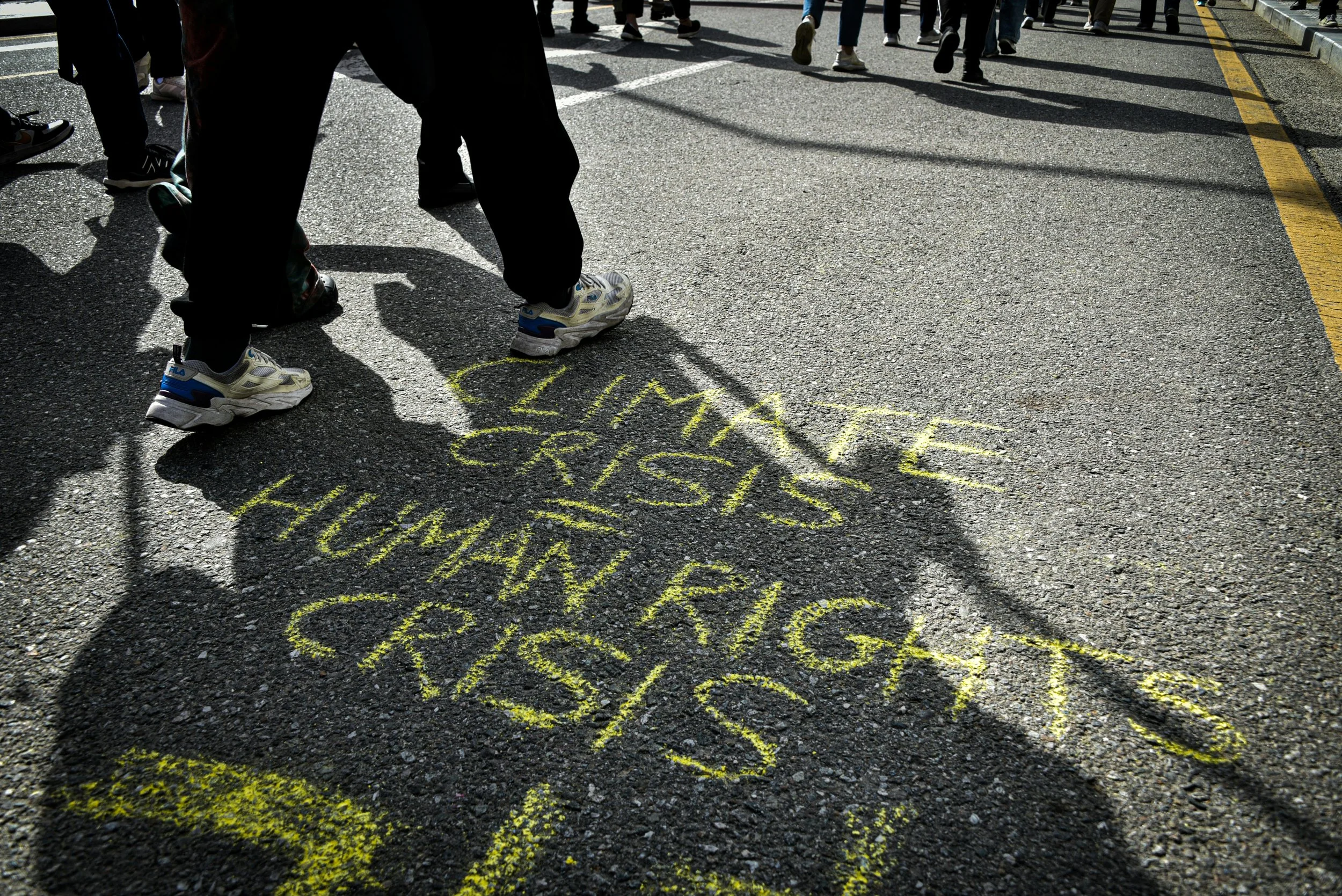
image credit | Rema
Season 5, Episode 12: Criminalizing Nature and Climate Values (and Rights to Protest)
Panu and Thomas explored the increasing vilification of environmental and social protest. They reviewed research on the "repertoire of oppression” that state and corporate groups are employing such as disingenuous application of laws regarding terrorism and organized crime to non-violent, legal protest actions by the public and advocacy groups. These tactics enable more oppressive and violent police action, that in some cases are used to justify brutality, killings and disappearances. While these repressive acts are typically associated with authoritarian states, they are alarmingly being used in democratic societies including Finland, the UK and the US. At the same time, counter-movements are also using legal methods to pursue more strenuous charges of “ecocide” and “climate atrocities” and practicing new and creative forms of resistance and grass roots organizing. As Panu noted, oppressive government actions can have unintended outcomes, for those who stand for Earth: Criminalization unites us even more.
Links
Anna Di Ronco (2021) What happened when Italy criminalised environmental protest. The Conversation.
Chris Rossdale et al (2025) ”The global criminalisation and repression of climate and environmental protest – a repertoire of repression”. Environmental Politics (2025): 1–26.
University of Bristol report on the dangers of repression of environmental protest:
Oscar Berglund et al (2024) Criminalisation and repression of climate and environmental protest. School of Policy StudiesDrilled News (2026, Feb 10). Yes, Climate Still Matters. Here's How It Connects to Every Other Crisis in the World Today:
Gaspard Lemaire (2025) The Climate Atrocity Paradigm. Earth System Governance.
Dr. Martin Luther King’s Talk to American Psychologists in 1967: “Creative Maladjustment”
Derrick Bryson Taylor (2026, Feb 10). On Bad Bunny (Benito Ocasio) “Love Conquers Hate” New York Times.
CCH Episode: Season 4, Episode 19: Living Sustainably: A View from Finland with Mette Hartonen and Niilo Syväoja
Transcript
Transcript edited for clarity and brevity.
Thomas Doherty: Well hello, I'm Thomas Doherty.
Panu Pihkala: I am Panu Pihkala.
Doherty: And welcome to Climate Change and Happiness. This is our podcast, show for people around the globe who are thinking and feeling deeply about the personal side of issues like climate change and in general, our relationship to the rest of the natural world as humans and human animals.
And you know, the mission of our podcast has always been to create a place for people to talk about their thoughts and feelings about nature and the environment and climate change and to ask the provocative question, what does it mean to be happy in the modern world? And that extends into our relationship with technology, our relationship with the economy, our relationship with politics.
And today we're focusing on politics and some of the kind of dangerous and scary political things that are happening these days regarding people's environmental values and their expression. Panu lead us into this. You've been doing some research on the criminalization of environmental protests.
Pihkala: Yes, in Finland there's a research project broadly about criminalization and young people. It's run by the Finnish Youth Research Society, a very nice research community, which does also lots of advocacy. Now in early 2026, from January to May, I'm working part-time with that institution and focusing on teams related to criminalization and repression in relation to young environmental activists. In Finland, we have many young people who have been active, especially since 2018, but of course also before Extinction Rebellion Finland is one big part of that, but there's also other organizations in the so-called forest movement where people from various organizations and networks have come together.
Forest issues are a really major environmental issue and economic issue in Finland. So there has been different things happening around environmental activism in Finland, but also globally. And in the 2000s and in the 2020s, researchers have noted that various forms of repression against environmental activism have been on the rise globally. So that's very disturbing and dangerous of course. The stakes are getting higher, more people are aware of these matters and then there's been this backlash of trying to silence or other ways damage environmental activism. And this is linked to many things of course and one is just generally negative attitudes against protesting and people having different opinions than those of folks who are in power. So it's about social control and it's about politics in the broad sense, but also about what is called de-politization. That's been an interesting thought for me also. So because of these criminalization attempts, sometimes there's been efforts to move environmental and climate activism away from the sphere of politics and ethical argumentation there to the sphere of crime and law and order. And that's quite devious.
Doherty: Yeah. Mm-hmm. Yeah. And terror, would say, too, like terrorism. Yeah. Yeah. Yeah. Yeah. Say more. So I think, listeners, this is a really pressing topic that we need to get on top of because it does affect our basic our basic connections with nature and our right to protest about our own health and our own values and our own lives. So, yeah, say same more. What are what are what are people finding out here?
Pihkala: Exactly. Yeah, totally agreeing with that and as many of you listeners know, I've been working a lot with eco-emotions, other things also related to environmental thought, the affective or emotional dimension has been key for me and that's one part of what I'm doing now. So to take a look at what young environmental activists feeling in relation to these various repression measures and societal discourses around criminalization, for example.
So the emotional dimension is there and it hopefully clarifies sometimes the objects and dynamics of ego emotions and climate emotions. For example, there may be fear and worry about what is physically happening because of climate impacts, but also fear and worry about how will state police react if we do a protest even peacefully around these matters. So that's the effective dimension at play and feelings of moral outrage and this what we in Finnish call epäreiluuden tunne. This unfairness feeling is of course much present here also.
Some scholars are much more learned than me in this field. It's always very interesting to get to know what others are doing. And in the University of Bristol, there's been a research unit really focusing on this. So Oscar Barylund and others. And one of the texts that I have found the most useful is a relatively recent review about what they call the repertoire of repression. And they name five types of that and they bring together research from various parts of the world. And sometimes the dynamics are actually pretty similar in the Global South and Global North and in relation to some of these types they are different. For example the really sinister end of this is killings or disappearances of environmental activists and that's happening much more in South America than elsewhere.
For example, in Finland, we are lucky that we don't have that—at least not yet. There's been some police violence, but nothing like the stuff that is happening in many South American countries, for example. So that's the sort of dark end.
But speaking of the five types of repression, there's new legislation often aimed at trying to hinder protesting. And in Great Britain, for example, there's bad examples of this in many other countries too. And then there's efforts to use existing legislation sort of creatively or sinisterly to curb protesting. For example, applying terrorist laws against environmental groups, as has been done in the 2020s in many countries. Then there's police violence or violence by other non-state actors. For example, private security forces and many scholars are concerned about these combinations of state police and some private security forces or some shady groups. then finally what they call vilification, which means that you are actively trying to damage somebody's reputation. And this nowadays often happens in social media in relation to environmental activists. So that five type repertoire of repression I have found very interesting and useful and of course partly awful because that is happening in so many places around the globe.
Doherty: Yeah. Yeah. Let's let's stay with this. So listeners, what Panu is talking about is some research, this idea of vilification. Many listeners are already educating themselves about this in the US because of the racist repression of the ICE kind of paramilitary forces that have been unleashed in cities in the US, people are learning to organize about this. But of course, that's that is yet another example of this kind of thing. The ICE violence is is, you know, directed toward immigrants and people of color. But it's a similar kind of thing. It's this this this kind of authoritarian repression. then when you protest against that, of course, it will, you'll then you'll become vilified.
So the model as I am understanding it, kind of sharing with me is that this, this vilification process is happening all the time. It's in the media. It's in social media. It's in right wing news. Environmental protesters are bad. They're criminals. They're terrorists. They're against our nation. Whatever nation that happens to be right there. They're outsiders. They're depersonalized. They're criminalized. They're not treated, for example, as, these are our fellow citizens that disagree with us and we should have a debate. No, they're simply just X'd out as criminals and hoodlums et cetera, et cetera, et cetera. And then you get these creative strategies where we say, hey, let's call the protesters terrorists and use this existing terror law that we have to suppress them and take all of their money. And then people put that into law. And then that, of course, prompts police action, harassment surveillance. And then it creates a vicious cycle of more tightening of the screws, so to speak.
And then in that state, it's not surprising that we start to get disappearances, which includes arrests, you know, under the guise of legal arrests and putting people in jail, taking their money, destroying their organizations, and of course, killings. And traditionally, we would say, well, those killings don't happen in the US, they happen in South America and Banana Republic somewhere. But of course, we know that's not true, because we've had some high profile killings here in Minneapolis of peaceful protesters. And of course, people of color in the US immigrants, African Americans, Native Americans know that killings and disappearances do and have always happened in the US. So that is the state of things. And there is a lot of momentum going in this really negative direction, Panu scary.
Pihkala: Unfortunately so,
Doherty: Yeah. So say more like what are outside of, you know, documenting this? And, you know, researching this, what else is happening in terms of like, fighting back, so to speak?
Pihkala: Yeah, luckily there's counter forces also and for example people working with law then starting to emphasize environmental values and the protection of environmental defenders more. And in Finland, for example, there's been a couple of quite widely publicized events where, for example, some members of the police, the Finnish police is generally quite civilized compared to many, many other countries, but sometimes they've lost it with the peaceful extinction rebellion demonstrations and using pepper gas, for example, against young people who are just blocking a street and sitting down. So that has sparked righteous anger and worry among people who don't have strong environmental values, but just because they want to defend democracy and the right to express opinion and they want to oppose developments which would lead into greater use of police force.
Doherty: Mm-hmm.
Pihkala: I know from discussions with my American friends that it's sometimes really difficult for people from another country to realize how peaceful the Finnish police can often be. also the characters of police forces in different countries can be very different. But intersectionality plays an important role here also. The Finnish police even is much nicer if you are white than if your skin color is otherwise and there's different kinds of people in every profession. But I want to mention an example from Finland which includes actually one of our previous podcast quests, guests. So we had an episode about trying to live in a sustainable way also in alternative communities and featured two young Finnish people, Niilo and Mette.
Doherty: Mm-hmm.
Pihkala: And now Mette was also part of protesting against a state plan to clear cut old growth forests. And know Finland has lots of forests, but we have only roughly one person left of the old growth forests, the really old ones. So people are very understandably trying to protect that also for biodiversity reasons and climate emission reasons and so on. And in this case, usually thepolice gave an advance warning, but now they just came to the site. There was some warning, there was a time period before that and just arrested eight people and Mette was one of them actually. And these eight people included one person who was just bringing food to the other demonstrators. And actually that was dumpster diving food, is sort of symbolic here. So there's been a court case. This actual demonstration and arrest happened in 2023. And now there was the court proceeding early this year. And the food-bringing person was freed from charges. But the activists did get fines. And the Finnish Metsähallitus, the state forest.
Somebody called for more fines than has been done previously, referring to some part of the legislation about causing damage to property and to business activities. And that was seen as a problematic issue also by legal experts because it can hinder the right to express opinion and the right to protest. So even in Finland we are having this creative use of existing legislation used for repression purposes. Well, I'll mention just one thing before giving the floor to you, thomas which is that the fines for these seven activists were almost 30,000 euros. So if you divide it with seven, that can be a big sum of money for a young person who doesn't have regular income. but they set up a crowdfunding and relatively quickly that whole sum of money was collected. So that's also an example of people getting organized against repression.
Doherty: Yeah. Yeah. So for every action, there's a counteraction. We have to keep reminding ourselves because it's crazy making given the media and the people in power that are pushing agendas. But we know the majority of people in the US and Finland all around the world in every place in the world, the majority of people support protection of nature, protection of forests, action on climate change.
And, you know, also general human rights is generally supported. Now that gets a little, little questionable in certain places. But for the most people are supportive of all of these things. And so we have to remind ourselves there's a huge, huge group of people that agree, all of us who are concerned about these things there. We're in the majority.
Unfortunately, as the minority is quite powerful and quote, well, quite well funded and quite ruthless about this. But we're in the majority. And anyway, positive things to think about. Well, let me show one more negative thing in here. I mean, it reminds me of what I've talked about. And what I talk about in my book is this idea of being a climate hostage.
Again, I created this concept or term some years ago just to reflect what I heard from people that I was working with in therapy and counseling and feeling stuck in an unhealthy society or an unhealthy economic system. But that it was more polite back then. It was more about like, I'm stuck in this this kind of gridlocked thing. But there was still some ceremonial greenwashing or you know, like at least you know, lip service towards sustainability. But now the now the climate hostage thing is much more dangerous. It's it's much more under the gun in like a true hostage situation.
Because we know the stakes are really high. We know the information is out there. The British government recently had a study about economic and agricultural collapse that's been suppressed. so everyone knows that the writing is on the wall here. so it is a kind of a ruthless end game for fossil fuels. So yes, there's some negative stuff. But again, re-
You know, can ask you in a minute how you re-center yourself, Panu, but you know, when I re-center myself, I remind myself about the norms, that it is normal to care about this stuff. And I don't want to think that I'm isolated because I'm not. I'm actually part of a global movement that I can trust. Anywhere I go in the world, I can find people. It may take me a little time, but I will find them. This is not new. Martin Luther King spoke about creative maladjustment to the American psychologist the year before his death and about this idea that if society is unhealthy then your job is not to be adjusted to the society but to be maladjusted that is what health is and so so if we don't fit in and we're misfits that's healthy in this case.
Pihkala: Yeah, thanks for reminding of that great MLK term. It links to the question of who is a criminal here. I'm reminded of the United Nations Secretary General Antonio Guterres and the folks from the University of Bristol in their reports against the dangers of criminalization and repression of environmental activism. are actually citing Gutierrez, who in 2022 said that, “climate activists are sometimes depicted as dangerous radicals, but the truly dangerous radicals are the countries that are increasing the production of fossil fuels.” So well done, Antonio Guterres on that.
Doherty: Yeah. Yeah. Yeah. And it's all about this this strategy of flipping things around. mean, our leader in the US, the basic way to understand our current president is that everything they say is opposite.
So if they say they're, you know, making the country great, they're actually not. If they say that other people need to go to jail is because they don't want to go to jail. If they say the other candidate has a crime family, it's because this person has a crime family. So everything is that opposite. And it's it is crazy making.
Pihkala: Yeah, it truly is. From the point of view of young people, it's of course outrageous and absurd that societies are more protecting fossil fuel industries than they are protecting people who fight for the future with peaceful protests against increasing climate emissions. And legally, this is seen in the international campaign about ecocide. know, the idea that destruction of environment should be criminalized. And then we have folks arguing that environmental protesters should be criminalized. So it's really quite a juxtaposition there. And of course there's strategic efforts to direct attention away from the actual problems towards the people who are protesting against the problems.
And that's something that we need to be conscious about and I also get comfort of knowing that there's so many people worldwide who know this and who share similar values and also encouraged by the bravery of environmental protesters and defenders worldwide and very often that's at the same time protesting human rights violations and acting on the behalf of whole communities so it's not just environmental activism, If we use that kind of expression, but it's defending life and justice in many ways that I'm greatly inspired by and feeling grateful for that.
Doherty: Yeah. So yeah, just think about listeners, what's inspiring, know, people, you know, the 70 % out there, bravery, integrity, also art and creativity and humor where I live in Portland, you know, the strategy has been to sort of face the brutal kind of repressors with silly humor, people dressed up in inflatable frog costumes and things like that, to just point out how actually absurd and ridiculous it is. And that's, that's a long standing strategy of the of the power of the powerless to use humor and art. Obviously, in the US many people saw the Super Bowl halftime show with Benito Ocasio or Bad Bunny the entertainer did a wonderful kind of symbolic medley of songs about Puerto Rico, which is a US colony, essentially that we control, the people there aren't able to vote.
Sadly, most people, many people in the US don't even know that Puerto Ricans are US citizens. They think of Puerto Rico as a foreign country. So it's a really tough thing. you know, these counter forces in the midst of war is when we have the strongest peace movement. That's the paradox of all this stuff, you know. So the environmental movement is getting stronger in many ways. That's why there's the repression. So I've got some coping ideas that I have in my book, Panu but what's your go-to personal coping or what do you recommend to people when young people come up to you and say, how should we cope?
Pihkala: Yeah, exactly, exactly. Yeah, that's a really important question. Of course, in many situations, I'm referring to the process model of eco-anxiety and the three categories of action and emotional engagement and taking care of yourself as a sort of broad, short list of what's important. But of course, in particular situations, may be various kinds of coping needs. But what emerges from for you from the book, I'm curious.
Doherty: Well, I spent a lot of time thinking about this in my book and how to how not to be trite and superficial in this because this is real stuff and how to be honest. Well, you know, I I talked about this idea of climate hostage, as we've already talked about today and made sure that people understood that because that is at the core of people's feelings of unfairness and eco anxiety and despair. But I, especially with young people, offer three basic roles as an environmental or climate activist. And I think it extends to social justice activism as well. The detective, the hero, and the survivor. The detective is the, just as you think, it's someone who investigates, who's someone who looks into things, it's someone who assesses wrongdoing, right? Who is really seeking out injustice and being a detective about that. The hero is someone who stands for good and stands for, my work around climate change, the people that are heroes are the people that are creating new programs, that are working on sustainability, that are working on food, that are working on helping people. So they're the people that are making the new society we need.
You know, detectives are diagnosing the problems and seeking out the bad, the wrongdoers. And then the survivors are people that are just hanging on and taking care of themselves. those are all okay roles. Even just to be a survivor means to take care of yourself and your family. And lot of, frankly, organizing that's coming out in relation to this repression that we're talking about is about survival, is about how do we keep ourselves safe in our neighborhoods and our communities. That's perfectly ethical.
And I think as people become better at surviving they can actually lean into the hero and the detective roles and those types of action.
Pihkala: Hmm.
Doherty: Lots of people appreciate my idea of ceremonial actions that there are certain actions we take that might not change the world, but they stand for our values. So when people go to protests, when people put signs in their windows, those are ceremonial actions, they're not going to stop the government from doing its thing, necessarily of itself, but collectively, the ceremonial actions stand for a lot.
And they do lead to low hanging fruit action where people will do things that are obviously okay, certain states are protecting protest, for example. And then there's the real action, which could include civil disobedience or things that are new, uncomfortable frontline action. So I think there's a perspective from the frontline to the back line that we can move back and forth. So I think once you start to simplify it, it makes sense for people, but you have to start with just your basic health and survival first. Because we know many people, that is valid. That is where it starts. For others of us, if we might have the luxury not to do anything, because we're essentially surviving. So we have to challenge ourselves a little bit.
But yeah, that's like a lot of things once you get into it, you can come to a you can come to a semi positive place about it. You know, that's still honest.
Pihkala: Yeah, and highlighting that it's a community thing, not any lone hero, but always happening in community, not to disregard individual bravery, but still it's comforting and also important to remember that it's not just individual.
Doherty: Yeah, and it depends, you know, because some people are alone. They're alone, you know, what could I say? was going to say loners, but that sounds negative. you know, some people are not joiners, you know, they like to do things on their own. I'm kind of like that. I like to do my own thing. I recognize, you know, social support and the benefit of things. So it really depends on your style. That's what also I talk about in my book. You have to do something that's based on your style that's authentic for you. And if that includes frontline action and putting yourself at risk, then you need to do that.
Pihkala: Mm-hmm.
Doherty: But if it's more, if your style is more to be in the back line and do things that are indirectly forms of activism, that's okay too. There's a place for everyone.
Pihkala: Mm-hmm.
Doherty: That's the key. That's the key. You know, the danger is that people, there's always this sort of like a popularity contest or, or click where I'm not, I'm not green enough. I'm not radical enough. I'm not cool enough. I'm not this enough, you know, trying to let go of that, you know, everybody does what they do. We don't necessarily understand or know everything that's driving people.
Pihkala: Yeah, definitely so and as we must come to the close of this episode I want to quote an anonymous Italian environmental activists. There was criminalization and repression against their efforts to oppose a pipeline for many environmental reasons that was contested and then finally the comment was that “if anything, criminalization managed to unite us even more.”
Doherty: Yeah, that's a great way to wrap it up. And that's Yeah. Yeah, doing evil things tends to backfire on people, doing healthy things tends to create more health. So try to do something that is healthy.
Alright, Panu, thank you so much for this. I really appreciate you bringing this topic up. This is so timely. And we've put a bunch of links in the in the show notes to some of these academic articles and public articles. And this is this is a big idea that's being talked about all around the world. So listeners, find your place, find your people.
In the US, there's programs like indivisible and local programs all around that you can tap into people here. And Panu and everyone take care of yourself.
Pihkala: Take care.