
Season 5, Episode 10: On “Kinship Medicine” with Dr. Wendy Johnson
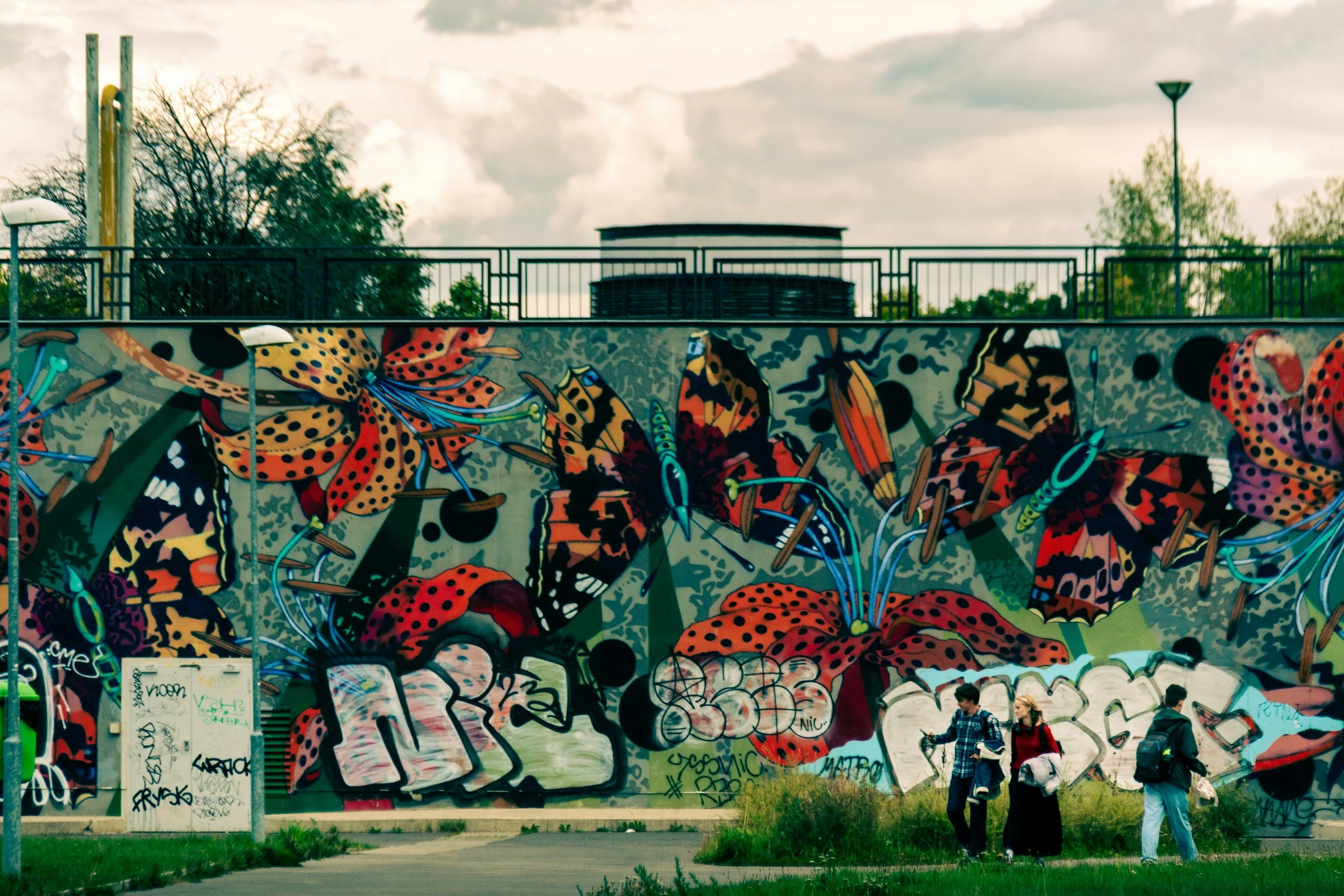
image credit | Silas Lundquist
Season 5, Episode 10: On “Kinship Medicine” with Dr. Wendy Johnson
This was a fascinating episode! Thomas and Panu welcomed Dr. Wendy Johnson, a family and addiction medicine physician, to discuss her book "Kinship Medicine." Dr. Johnson shared her journey from political advocacy to medicine (“I went to medical school to do politics better.”) and the discussion delved into the social determinants of health, the historical roots of Western medicine, and the need for collective, relationship-based approaches to well-being (“Wellness comes from communal strength.”). Wendy drew a metaphor from the chrysalis stage of development, emphasizing the importance of planting seeds for a better future and the role of “imaginal disks” that hold blueprints for future transformation. Join us for an inspiring talk in the new year.
Links
Book: Kinship Medicine (2025, Penguin Random House)
Transcript
Transcript edited for clarity and brevity.
Thomas Doherty: Well hello, I'm Thomas Doherty.
Panu Pihkala: I am Panu Pihkala.
Doherty: And welcome to climate change and happiness. This is our podcast for people around the globe who are thinking and feeling deeply about climate change, obviously, and other environmental issues and larger questions like connection to our earth and connections to the land and connections to community and our personal health. And, you know, we always bring it back to the emotional experience and we are really lucky to have a special guest with us today.
Wendy Johnson: Yeah, thank you for inviting me, Thomas and Panu. I'm Dr. Johnson. I'm a family and addiction medicine physician, and I am in Santa Fe, New Mexico, and author of Kinship Medicine, which came out earlier this year.
Doherty: Yeah. And I'm really excited to have to have Wendy on the show with us. I got a chance to meet Wendy recently and see her read in Powell's books here in Portland about kinship medicine. And when I saw her book and started reading about it I felt a kinship to the book because it really felt like it was on a parallel track with my work and with Panu's work and with my recent book Surviving Climate Anxiety. So we've been chatting.
We've interviewed a lot of interesting people on our podcast, but Wendy is the first medical doctor that we've had on. That gives us a whole area to talk about in terms of personal health and larger conceptions of health in our in our society and how to live a healthy life in terms of one's values and how that leads to advocacy and connection. So there's a lot we can talk about. No doubt we will moan that we don't have enough time after our 30 minutes, but let's do what we can. Panu, do you want to get us started?
Panu: Warmly welcome Wendy also on my behalf. Lovely to meet you. In Helsinki there's a growing interest to planetary health. Couple of very nice doctors working on that. It's relatively marginal topic in Finnish medical research and that world. But it's growing luckily and then there's of course many good people working with the modern human world and trying to advance respect, gratitude, interconnectedness. So there's many things in common with your book. it would be very nice for the listeners to hear something about your journey towards this time and place where you are now. So not every medical doctor ends up writing about kinship medicine. So would you like to share something about that journey?
Doherty: Mmm.
Johnson: I mean, I think the roots of it come from my upbringing. My mother is the daughter of Italian immigrants who grew up in my grandmother grew up in the Alps near kind of Slovenia and Austria in Northern Italy. My grandfather grew up along the shores of the Adriatic in a town called Fano and they had, you know, they instilled in my mom a connection with nature, a connection to the land that they brought, and also a deep sense of community. Growing up visiting my grandparents, you know, it was like a very fluid situation, people coming in and out of the house, maybe they were family, maybe they were friends, maybe they were neighbors, you know, it was just like a connection to the larger community. wasn't just our little house closed off. The door was always open and people were always coming and going. So I think, and then I continued throughout my life to really have themes of living in community. I think I gravitated towards that even though it's not facilitated or encouraged really in the United States and our culture that we have right now.
And then in my practice as a doctor, think over the years, maybe those ideas of connection to nature as a child, we always took camping trips. We weren’t very wealthy. And so we did cheap vacations, but always in nature. And again, those themes, you know, continued throughout the rest of my life. And as a doctor, I think through 30 years of practicing, I have seen that the lack of community and connection to nature in my patients really is a huge influence on their health, which we don't address or talk about at all in Western medicine, almost at all. And I kind of thought about this a lot and just thought. So the frame almost that we have this very individualistic frame of Western medicine that, you know, your wellness and your health is all about your biology, your genetics is really wrong. Cause that's only about 20% actually of what determines your health. That other 80% is all those things I'm talking about, the connection to community, your social situation, your social status, your educational background, all those things we now have called the social determinants of health. And they also include your connection to the environment. And when I look around, see, you know, we are really ecosystems, medical science is really showing that with our microbiome, you know, you're actually mostly not you. You have 30 trillion cells that have your DNA, but 39 trillion cells that have other DNA, your microbiome, the organisms that, and those organisms keep you alive. You couldn't live without them.
Doherty: Hmm.
Johnson: So your body is an ecosystem in communication with other ecosystems. So really health is a communal attribute. And, those ideas developed over, like I said, 30 years of practice and seeing patients and kind of thinking about what determines their, whether or not they get well or not, whether or not they see themselves as well or not, and what determines that. And so you know, writing a book is a journey. And certainly when I started writing it, maybe these ideas weren't so formed and you kind of, you read a lot of other folks, you learn a lot of other views and you start to really think about how our frame in medicine and health really keeps us, kind of keeps us sick, keeps us disconnected and how we can change that.
Doherty: Yeah, that's beautiful. I am wondering about so many things about this. Let's hold the thought because I do want to get back to the social determinants and all of this stuff. But if we ask that question again, you know, what do you think, you know, could you say a little more about your early life and how, you know, how your journey to be a medical doctor? And how did you, I know a lot of practitioners that do this work have had to be pathfinders and even push against their training a little bit. So how did your training work and how did it, when did you decide to be a medical doctor and how did all that, what's a little bit of that story?
Johnson: Well, I have a very funny story with that. I actually gravitated towards more English. My undergrad degrees were in English and political science, and I gravitated more towards advocacy. One of my first jobs out of college was being the organizer for the 20th anniversary of Earth Day in Ohio for the events that were happening there. And so I also worked in the state legislature. And working in politics, actually got a little discouraged back in the day because in electoral politics, in the legislature, it seemed that a lot of people working in politics were, I mean, they cared about the issues, but they also cared maybe even more about the game of politics. so, especially, you know, not even the elected officials, but the people working on the staff, you know, it seemed like a lot of what we spent our time thinking about was, strategies about who was going to get elected, about who was going to do this or that, and it wasn't really about the issues as much.
And so, and I felt like the work that we did was disconnected from the lives of real people and what they really needed. You know, it was people making assumptions and judgments maybe not based on data, not based on people's stories. So I decided if I wanted to do politics better, I needed to have a position or a profession where I could really be a receptor for people's stories and really understand what people were experiencing and what they needed. And so I went to medical school to do politics better. And it seems like a weird thing, but there's a lot of, I found a lot of mentors who also seem to have that same ethos. And one of them, not mentor, because he lived in the 1800s.
Doherty: Hmm
Johnson: was Rudolf Virchow, 1800s, who was a famous German physician, of developed cell theory, helped develop cell theory. And one of his famous quotes that I love, it's kind of my guiding quote is “medicine is a social science and politics is just medicine in a large scale”. And so that's kind of one of the guiding principles of my life and how I practice medicine and what I bring to my practice.
Doherty: Hmm.
Panu: Thanks for sharing that, that's very interesting and I'd love to mention a book here which I've always found very fascinating which is Roger Caillois. Caillois I guess might be the French pronunciation, Man, Play and Games. That was written in the time when one could use the word man to refer to whole humanity so things have got better in that sense but it's about the games people play in different cultures and histories both the sort of free time games but also how
Johnson: Hmm. Yeah.
Panu: game dynamics can be linked to profound motivations of different people. And that was really eye-opening as you say that some people really just love the game and they might want to win, there might be a strong inclination towards that and then there's some games where it's more about luck and luckily also games where it's more about just the playing and the fun of it. And of course I've been leaning more…
Doherty: Hmm.
Panu: Towards the third option. And I tend to regard this as a more sort of ecological way of living, even though, of course, in the modern human world, we have also lots of competition. But I don't think, Thomas, that we've ever talked about Roger Caillois or Johan Huizinga, who wrote Homo Luden, the man who plays. So that gave me an opportunity to go there. And very interesting, to hear the story of your.
Johnson: Yeah, yeah, yeah. That's an, I'll have to look that book. I don't know that book, so I'll have to look at that. That is interesting. Yeah.
Doherty: Mm-Hmm. But it's it is really great to you know, it's always a good sign of a conversation when people start pulling out books like this that you know, are influential on our thinking, you know, so it tells us well, first of all, tells us we're not the first people to, we're not the first people to challenge to grapple with these questions. So, you know, we're in a place of with kinship medicine and with you know, eco psychology and a lot of these holistic, you know, topics, we're in a place of perennial questions like what does it mean to live? What does it mean to live? What does it mean to be a human? What does it mean to live a good life? You know, this episode is coming out.
Johnson: Mm-hmm.
Doherty: will be coming out in the beginning of 2026. you know, it is a great time to think about what is it, what is it, you know, come back to some of our first principles as people, like, what does it mean? we've gathered all this wisdom over the years and as I start my new year, what does it mean? What does life mean to me and how can I be my best self and how can I remember my inspirations? So I love that quote. I went to medical school to do politics better. That's a great quote.
Johnson: Right. No.
Doherty: Yeah, so you came into medical school with a sense of advocacy and also sounds like with some a little bit of rebellious questioning about the whole edifice of medicine.
Johnson: Mm hmm. Yeah, I mean, I certainly I think I come to everything in my life like that. I don't know where I got that from specifically, but I do think I'm somebody who thinks, you know, why are we doing it this way? And is this really the best way? I mean, to your to your question about the, you know, how can we live our best lives kind of, you know, I think you know, right now that's really difficult for a lot of people because things are so dark in the world and it's, you know, it's often something that comes into my office, you know, I see people who come in and, you know, how are you doing? Well, I'm doing okay, except for the world. You know, that is a very common thing my patients sit down and say to me. And I do still see patients a couple days a week.
Yeah, it's a, it's a challenging thing. You for somebody who is advocacy minded, politically minded, you know, how do you connect what's going on in the world and your feelings about it with what's going on in your own life? And you don't want to just ignore it, but you don't want to get, you know, completely dragged down by it either. And I think. In Kinship Medicine, I talk a little bit about the answers and the end of the book are, you know, first of all, building a foundation of resilience in your own community and figuring out what you can do locally to do that. Because I think our ideas about wellness, again, are very individual based. But the reality is that wellness really comes from communal strengths.
It's hard for an individual to be well when a community is sick around the individual, despite what our billionaire overlords think. So I think that's step number one. And then step number two is an idea of a sense of purpose of how you can engage with what's going on around you in a constructive way.
And there's all kinds of research showing that a sense of purpose in your life is connected to better health mentally and physically. you know, in a very tiny nutshell, that's kind of what I talk about in kinship medicine as well.
Panu: Mmm. Lovely to hear that also and listeners, if you want, can check out our previous episode with Bob Doppelt and the Transformational Resilience Coalition. There's a lot of same things going on with what Wendy here testifies, the community approach and high focus on meaning and purpose. And also perhaps the episode with Matteo Innocenti from Italy and the importance of community when there's more disaster coming also. In several European countries we've noticed that if we take nurses and doctors it's usually nurses who resonate better with eco anxiety or climate anxiety. We have been wondering about this dynamic there might be many reasons for this but does that ring any bell for either of you? I don't think too much that we have been talking about this.
Johnson: Yeah. Do you have thoughts on that Thomas?
Doherty: Yeah, well, it's funny that you mentioned that, Panu, because, yeah, I don't think, Wendy, you and I had talked about this, but, know, in my graduate school, my psychology graduate school, I ended up doing my dissertation in behavioral medicine, and I worked at a cardiac rehabilitation clinic. And then I also did training at UMass Medical Center and the behavioral medicine clinic and the John Kabat-Zinn mindfulness program and things like that. So actually I spent a lot of time in the medical system and in cardiac heart health, it is the nurses that really are attentive to that, at least in the traditional cardiac scene, at least as it was 20 years ago, the medical people were really dealing with the mechanics of really complicated surgery, like open heart surgery and placing stance and dealing with people with heart attacks. But all of the psychosocial support and the emotional, the emotional expression work was facilitated by the nurses, they essentially ran the the nurses and the physical therapists ran the cardiac, so that they dealt with all of that social stuff. And I do think that is that is a pattern in a lot of health issues. Yeah, yeah.
Johnson: Right. Right. Well, I'm going to take this back to history again and sort of surmise that, you know, you can look at that again, the roots of how we got our medical system that we have. And one of the roots goes back to Descartes and the idea that the mind and body are separated, that the body is a machine and Western medicine should be concerned about.
Doherty: Uh-huh.
Johnson: how that machine works and fixing the machine doesn't have anything to do with the mind. Now we know that that's not actually true and your mind hugely influences your physical and biological health as well as your mental health obviously but that's the roots of Western medicine. And so then another interesting thing happened around the same time we were developing the germ theory both in Europe and the United States is that this allopathic tradition of men, there used to be like a million healing traditions, including midwifery and a lot of things which were much more integrated, holistic and connected to the natural world. And then this allopathic machine view of that decided, this is the scientific view. This is the enlightenment view. this, this, is the better, superior way of healing.
Doherty: Mm-hmm.
Johnson: And it's dominated by white men and the white men both in Europe and in United States in different ways had ways of basically demonizing all other forms of healing, including midwifery, know, which had a lot of what I would call scientific basis, much more than OBGYN in the early years of the 1800s and 1900s. And, you know…
Doherty: Hmm. Hmm. Yeah.
Johnson: All that kind of relation to, I mean, in Europe, it resulted in witch hunts and, you know, a lot of that was killing these traditional healers. In the United States, there was this thing called the Flexner Report, which demonized all other forms. If you didn't go to Harvard or Johns Hopkins and get a medical degree. So I think that, you know, a lot of those people that had those healing skills, were women and people of color, went into the nursing profession. And then all of that other psychosocial was kind of offloaded to nursing. And so I think we inherit that division today where, you know, Western medicine still, although now in the last 20 or 30 years has said, we should pay attention to these social determinants of health, but there's still no place for it because the system kind of grew up without paying attention to it. So we have a for-profit, I mean, even in places where you guys have a much better healthcare system in most all European countries and everybody at least has access to it, it's still run on money, right? Things that you can't charge for don't really get done. And so there's no real space for those social determinants of health, but much better in Europe obviously, it's, you know, things that aren't kind of monetized don't happen quite as easily. And so that healing connection is not monetized, so it doesn't really get prioritized.
Panu: Very interesting historical thinking on this and also the very enlightenment western mindset of problems to be fixed. Which is seen in troubles around mortality and death also. there's a very common inability to think sort of in a common sense way about death and dying and doctors end up trying to fix it. And I think that extends to also other more existential questions such as anxiety about the state of the world. So if you only approach it as a mental health problem to be fixed, it's not going to get us very, very far. There's also aspects of how are we going to live in this kind of world and what kind of systemic change would we need to do so that these things would get better.
Doherty: Mm-hmm.
Panu: I've been hearing a couple of things that you've been saying about what kind of political work your new book is doing in the world, but I wondered whether you'd want to talk a bit more about that.
Johnson: Well, what? Go ahead, Thomas, sorry.
Doherty: Yeah, let me hold that thought, Wendy, before you jump in, before you jump in, we have about 10 minutes. And so I want to, as you answer, I want to bring it to personal health also and what we can do as people on the individual level, because I'm really curious, even a sound bite about how you, you know, advice you give to people in your book about this because.
Johnson: Okay.
Doherty: I feel like I want to make sure we land on personal well-being as we fly around the political questions.
Johnson: I think they're really deeply connected because I think that our anxiety comes from this idea that we need to fix this problem, but then we get all these things that are not fixable. We're headed towards apocalypse. so there's this disconnect culturally in our heads about the messages that we keep getting. I'm supposed to be hopeful. I'm supposed to be optimistic, but it's just we're all going to die. how can I be optimistic?
Doherty: Mm-hmm.
Johnson: So a couple of things, I think it is important to have a realistic acceptance of the the mess that we're in. We're in a really big mess and faced with that. How can we have answers that might get us out of the mess? But maybe not in my lifetime. I mean, I, you know, often plant fruit. I have a little orchard in my backyard and I'll plant, you know, I planted a bur oak this last year. The bur oak is like, you know, probably two inches, three inches in diameter, you know? I am not, I mean, hopefully that bur oak will survive, but I will not live to see that bur oak be 50 feet tall. You know, I will die before then. That is okay, you know?
And so this it's connected to what Panu was saying about acceptance of death and acceptance of our lifespans and not trying to delude ourselves into thinking that if you know there's billionaires that spend two million dollars a year so that they can defy death and you know while other people don't have food to put on the table. What kind of society is that? So I think in one hand it's just OK. Things are really bad.
You know, we're facing this climate catastrophe. What can we do in face of that to plant the seeds literally and metaphorically so that at some point something better can rise out of this? And it might not be something that I ever see in my life. You know, very likely it won't.
You know, I might just be the person who got picked to live through these dark times and not see the butterfly that emerges from the chrysalis, right? But what can I do? OK, so this is a thing that I recently learned is that caterpillars have inside of them. What's called and whoever named this, I just want to meet them and thank them. They have little collections of cells called imaginal disks.
And those imaginal disks contain inside of them the instructions for making the wings and the antenna and the bodies of the butterfly. So I think we're in a chrysalis stage right now. And our job is to be creating those imaginal disks, those little centers of experimentation and resilience and advocacy that will, you know, become the butterfly eventually, which we may not see. And so I think we all need to experiment. A writer here in New Mexico, who I stole his ideas for the book and quote him, Bill Du Bois, talks about building arcs, these metaphorical arcs. I mean, we may build 10,000 arcs and maybe only 100 of them get across the ocean and the storm that comes and become whatever and our centers of resilience from what something else can rise. So when we want to connect it to our personal health, again, I think the job of creating these imaginal disks is communal. And so what can we do? And that actually happens to be what's good for us as humans. I have another little thought experiment I give in my book, which is imagine that you and I are aliens and I gift you a little family of humans as a gift, as that you can nurture. And you have to create a world where these humans can live their best life. What world would you create? Would you create a world where, you know, there's all kinds of environmental contaminants and people are all, no, you would create a world where there's a biodiverse community that you know where these humans thrive. They need clean air, they need clean water, they need connection, they need purpose. And so those are the things that we need in our personal lives to be well.
So what can we do in a very practical, like, I hate actually, my book has been categorized as a self-help book in like Amazon and different places, and I actually hate that. My book is a collective help book. That's how I would like it, but there's not a genre of that, but maybe we should create one. So I do think that we have to look around our communities. You will find a lot of things going on that you can join up with. If you can't find that start something, but start it with other people. It's not an individualistic thing. there's so many ideas of how you can connect with nature in a communal way.
Doherty: Mm-hmm. Yeah.
Johnson: You know, going on hikes with friends, community gardens. In Santa Fe, we have the Santa Fe Conservation Trust, which volunteers go together and work on, you know, some of the conservation projects and things that we have in the area. There's all kinds of advocacy. I think even if you live in a city, there's ways to connect with nature and with other people.
I think there's networks of mutual aid that are really important right now when people are being persecuted in all kinds of different ways. And my friends in countries that have survived dictatorships have taught me that. So I think that in a personal way, first we have to get rid of our idea that our individual self is the most important thing in the world and change from an individual centric to a more life centric mindset. And from there, you really do see lots of ways to connect with others.
Doherty: Beautiful. Beautiful. Yeah. Yeah. So as I come away with this, I thought there's a number of inspiring thoughts for my new year. But, really, you know, letting go of and it's hard to explain this, right. But letting go of personal health as a goal itself, you know, in the sense that it's never only going to ever be personal. Right. So we have to let go of personal health and, you know, really embrace collective health, which is sort of a disorient, can be disorienting for people, but ultimately more of a better orientation. Yeah. Yeah.
Johnson: I think that's right. Yeah. And I think it's just a mindset change. We get bombarded with all of this individual, the kind of capitalist infrastructure wants us to think of ourselves as individuals and wants to think, you know, how we get better is satisfying all those individual desires and needs at the expense of anybody else. And we have to just really reject those messages.
Doherty: Yeah.
Johnson: and really cultivate, as I said again, this more like life-centric. Think about how you're connected to everybody else. Think about how your actions reverberate throughout your community and make them positive rather than negative.
Doherty: Yeah. Yeah. So listeners, we're going to wrap up here in a minute, but there's a really super inspiring ways to think. you know, it's, it's easier said than done. So we want to be careful. I know for myself, I love that, that metaphor, that, that image of creating the world for the little humans that you have, you know, and I think all of us intuitively know what would make the little human family healthy.
But then if we try to say, can I do that with my life? Then we do confront this whole system and this whole history. And it can be very disempowering and very disillusioning. But if we stay with it and then create little arcs in our life and little movements in the direction, that's really where the game is, right? Just little positive movements.
Panu: Exactly, this has been very inspiring to listen to you Wendy and talk with you Thomas as always and the old wisdom of when you practice care you receive care at the same time. So I think that's very much true also in these troubled times and really looking forward to engaging more with your book and work Wendy, so lovely to meet you.
Johnson: Yeah, thanks so much for having me on. It's been a great conversation. As you said, wish I could go on longer.
Doherty: Yeah. Well, we will put some links in the show notes to Wendy's book. And she's written some really great op eds that really get into this, you know, all this collective health and really engaging with the hard politics of the modern world. So, it's super inspiring. This is a great episode. So many quotes.
You know, this idea of imaginal, imaginal disks and building arcs and what does it mean to be human? what a lovely conversation to kind of, you know, expand my mind this cold morning.
So, listeners, Wendy, Panu, everyone, be well.